Season 1 · Episode 1
How do you make a planet that's fit for life? Richard Hammond finds out, by building one.
How do you make a planet, or a solar system, a galaxy or even a universe?
From the planets to the stars and out to the edge of the unknown, history and science collide in a wondrous yet deadly adventure through space and time.
2007
Carl Sagan covers a wide range of scientific subjects, including the origin of life and a perspective of our place in the universe.
1980
In each episode, geologist Dr. Iain Stewart explains the effects and importance of a specific force of nature, such as wind or volcanism. He also examines the various ways in which it shapes planet earth itself and influences life on it, often in conjunction with other natural forces, and sometimes with lifeforms, as in the 'apocalyptically' grave case of global warming.
Professor Jim Al-Khalili investigates the important concepts of energy and information.
2012
Hawking gives us the ultimate guide to the universe, a ripping yarn based on real science, spanning the whole of space and time -- from the nature of the universe itself, to the chances of alien life, and the real possibility of time travel.
2010
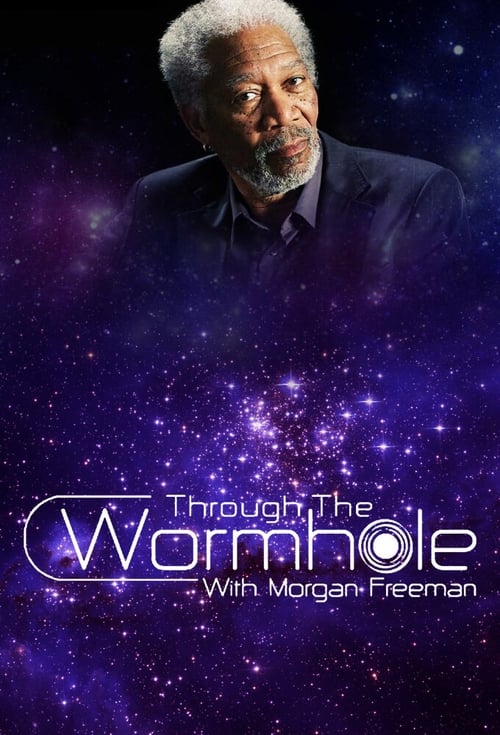
Hosted by Morgan Freeman, Through the Wormhole explores the deepest mysteries of existence - the questions that have puzzled mankind for eternity. What are we made of? What was there before the beginning? Are we really alone? Is there a creator? These questions have been pondered by the most exquisite minds of the human race. Now, science has evolved to the point where hard facts and evidence may be able to provide us with answers instead of philosophical theories. Through the Wormhole brings together the brightest minds and best ideas from the very edges of science - Astrophysics, Astrobiology, Quantum Mechanics, String Theory, and more - to reveal the extraordinary truth of our Universe.
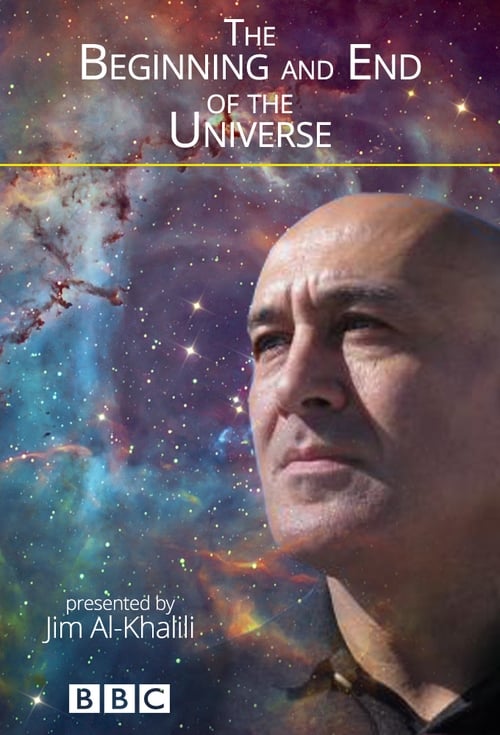
Jim Al-Khalili tackles the greatest question in science - how the universe began. By recreating key experiments Jim unravels the mystery of science's creation story.
2016
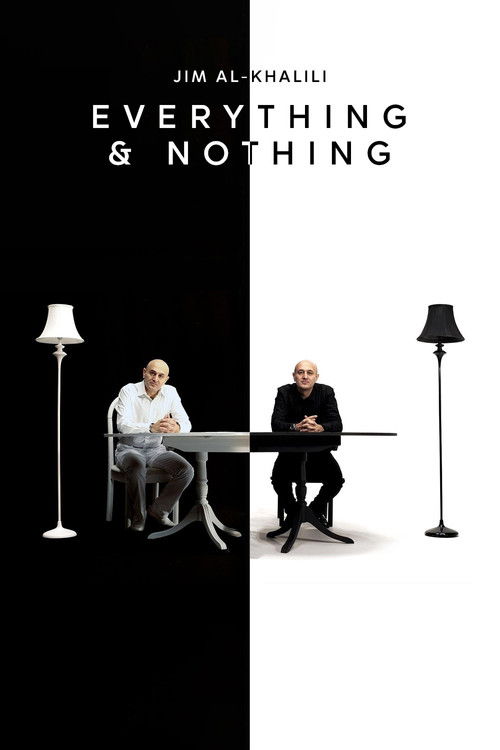
Two-part documentary which deals with two of the deepest questions there are - what is everything, and what is nothing? Professor Jim Al-Khalili searches for an answer to these questions as he explores the true size and shape of the universe and delves into the amazing science behind apparent nothingness.
2011
No description available.
2019
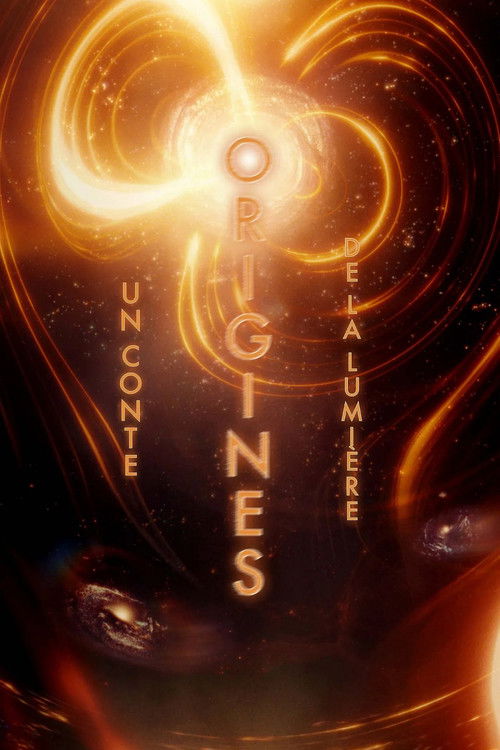
Since the Big Bang 13.8 billion years ago, light has sculpted the cosmos. It traverses the void, interacts with matter, and dances with shadows. It multiplies and proliferates, offering the world ever more complex and luminous structures. If it could speak, what would it tell us?
2025
1998
A users' guide to the cosmos, from the Big Bang to galaxies, stars, planets and moons: where did it all come from and how does it all fit together? A primer for anyone who has ever looked up at the night sky and wondered.
1987
Seven episodes explore the fascinating adventure of the universe. Scientific rigor is complemented by spectacular images created with the aid of cutting-edge technology and special effects, films, animated fact sheets, and astronomical instruments. Piero Angela connects with a replica of himself in space, AstroPiero. A second correspondent, Alberto Angela, connects with the study from astrophysics laboratories and observatories around the world.
In this spellbinding series, Professor Brian Cox visits the most extreme locations on Earth to explain how the laws of physics carved natural wonders across the solar system.
Professor Brian Cox goes on a grand tour of the planet to explain how the Earth's beauty is created by just a handful of forces.