Season 1 · Episode 1
Meet Dr. Jane Goodall DBE, world-renowned primatologist, humanitarian, conservationist and UN Messenger of Peace.
Do sharks have friends? Watch and see if there is actually anything to study when we look at the "social behavior" of sharks off the coast of New South Wales, Australia!
Wouldn't it be wonderful if you could just sit and watch a movie about the universe and see how everything unfolded? Thanks to a new scientifically accurate computer simulation called the Illustris, which models a part of the universe, a cube 350 million light years across, you can!
Each year, over 2000 people apply for jobs in Antarctica, but few are successful. What are the physical and psychological attributes required to work in the most remote location on Earth? Could you snag a job in sub-zero temperatures at an Antarctic station?
Take a look at the Voyager unmanned space probes launched in the 1970's -- and where they are now after 36 years of travel! Voyager I is the furthest travelled man made object in space. What are the missions finding in the distant universe?
Titanium implants are a favorite among surgeons. They're light, durable and strong and readily accepted by the human body. But with each surgery comes a small but potentially deadly risk - infection through the introduction of bacteria. How can they design implants to resist bacterial infection?
In a family reunion like no other, astronomers reunite our sun with her long lost sibling. Dr Graham Phillips meets the new relative and explores its similarities with our sun. Could it even have planets, like our solar system, and be another home for life?
Dr Graham Phillips investigates new technology that is able to convert more than 40 per cent of the sun's light into electricity. This is more than double the efficiency of today's domestic rooftop solar panels, and could eventually lead to cheaper sources of renewable energy.
Thousands of chemicals are used in everyday products – in our water, our food and in the air we breathe. It’s the chemical soup of modern life and it’s virtually impossible to escape them. Is there adequate regulation and testing, or are we in the midst of an uncontrolled, human experiment?
Good to know as you travel to the Antipodes - Australia has the most venomous snakes and spiders in the world. But, if you’re bitten, can you rely on anti-venom? Dr Graham Phillips investigates the effectiveness of anti-venom.
What is memory? How do our memories change from childhood to adulthood? How we can build up greater brain reserves to power our mind into old age? Brain epigenetics, how the expression of our DNA can be changed by our experiences, is an intriguing new area of science with huge health implications.
Is there anyone out there? Does the popular movie quote 'ET phone home' have any substance? Astronomers have been pointing their radio telescopes at the skies for decades trying to pick up alien signals. Hitch a ride as we join astronomers trawling through the galaxy looking for signs of life.
How can a supercomputer can help researchers to a better understanding of the poliovirus at an atomic level? This has implications for understanding and eradicating deadly diseases worldwide.
It's amazing to think that in the 1900s a mere tenth of the world's population lived and worked in cities. Now it is over half. With soaring populations, how will we keep our cities live-able? And what will the city of tomorrow look like?
The promise of quantum computers is that what would otherwise take a billion years to calculate, could be done in a few seconds. First-generation quantum computers have started to appear. Indeed, earlier this year, Google bought one, The D-Wave 2. How will this advance change our future lives?
Think spiders aren't beautiful? Then think again! The colorful and beautiful jumping Peacock Spider, native to Australia, will change your mind.
In the western world there’s an epidemic of allergies. Could it be that our lifestyles are too clean? And that we’re not exposing ourselves to bugs that help build our immune systems? Is there bacteria that is good for us?
There’s no doubt that cardiac implants or stents save lives. They unblock arteries to prevent heart attacks. But because the body treats stents as foreign, the risk of blood clots is ever present. How can we coat the stents in order to stop the rejections?
It seems that the bee population crisis is intricately tied to the way we have changed our planet. Catalyst investigates how modern agriculture methods, increasing diseases and the impending threat of the deadly varroa mite could destroy the last safe-haven for bees on the planet, Australia.
This special report looks at the domino effect of environmental and atmospheric factors that drive the globe to wetter, hotter, drier and colder extremes.
By building see-through flowers, researchers at the University of Connecticut have captured high-speed, high-magnification images of the remarkable tongue of the Hummingbird. And they've revealed that previously held theories about the diminutive birds are wrong!
Cuneiform documents in clay cover everything from political affairs to economic practices, from 3400BC right up to the time of Christ. But can modern technology unwrap clay envelopes so that archaeologists can preserve the artifact but see the letter inside? Watch and see!
Fifty meters beneath the teeming mega-city of Tokyo is an underworld river system - 6.4km of tunnels, colossal water tanks, massive pillars, giant pumps that remove 200 tons of floodwater every second. It’s an engineering marvel built to protect Tokyo against the increasing threat of flooding.
Performance-enhancing drugs aren't limited to just sport and increasing your physical prowess. There are substances that could improve your mind power as well - things like help you learn faster or improve your memory. Do we face a future where we'll be increasingly brain doping?
A short video on this phenomenon of nature, particularly evident in deep ocean animals.
By investigating the tell-tale signs of earthquakes and tsunamis written into the landscape over the last thousand years, Japanese scientists are rewriting the rule books for disaster prevention in the Pacific.
Take a mind-blowing journey through human history, told through six iconic objects that modern people take for granted, and see how science, invention and technology built on one another to change everything.
2019
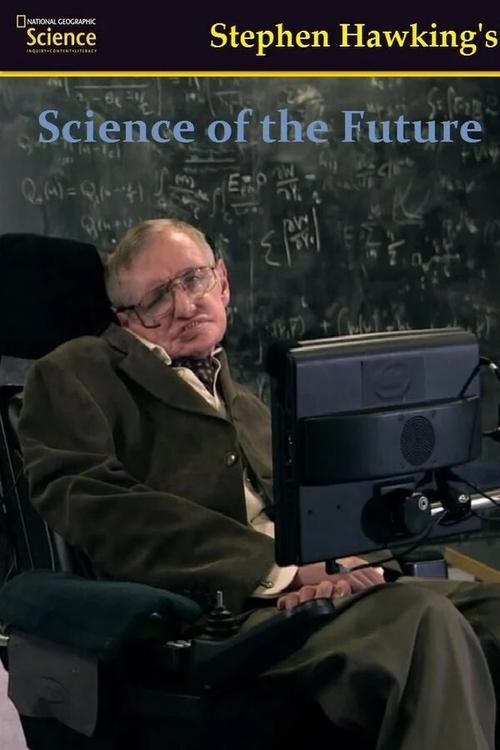
Stephen Hawking’s Science of the Future investigates the very latest game changing innovations. Each episode takes one area of progress and sends five top scientists out to actively test the inventions and breakthroughs that are driving it. The team explore human upgrades, the virtual world, bio-mimicry, high-tech emergency responses, and more. Featuring a wide range of examples, from advanced robotics and breathtaking digital actors, to cutting edge smart homes and electronic brain stimulation, the series reveals how science is delivering astonishing improvements to all our lives. Using the evidence they gather, the team reveals the year when each innovation will be rolled out for us all to benefit from, and Hawking then draws out his own uniquely insightful predictions about what our world will be like in the years to come.
2014
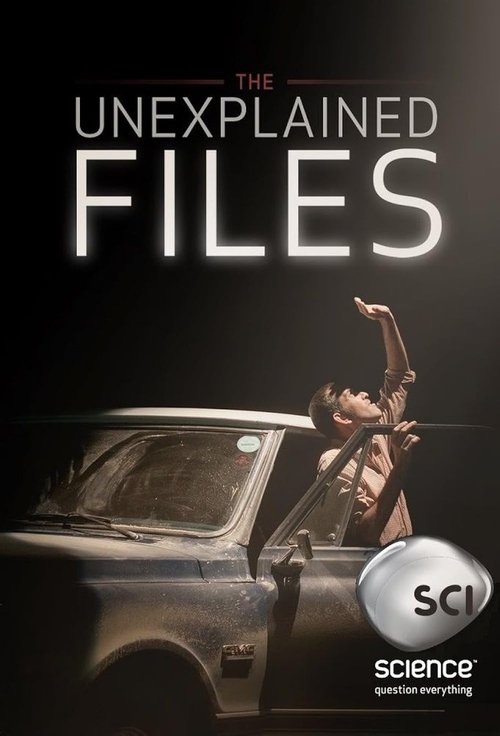
From strange abductions, to mutated species, to bizarre occurrences, there are some phenomena that science cannot - or will not - explain. This summer Science Channel unveils some of these shocking and mind-boggling cases from around the world in the world premiere series THE UNEXPLAINED FILES. From mysterious disappearances and UFO encounters, to unidentified fanged predators and reported curses, THE UNEXPLAINED FILES investigates actual, inexplicable occurrences that have confounded scientists and inspired legends. Science Channel invites viewers on a mystifying journey that will challenge disbelief with THE UNEXPLAINED FILES.
2013
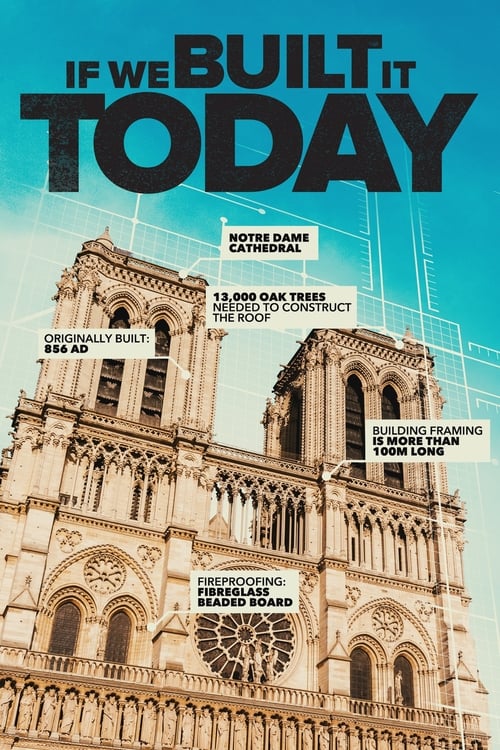
They are some of the world’s all-time greatest building projects. Most have stood the test of time, but with today’s technology, could they be duplicated and done better?
No description available.
2009
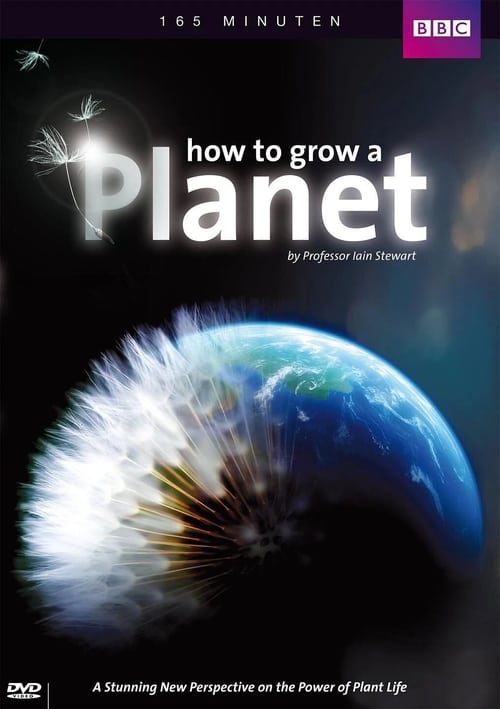
Geologist Iain Stewart explain in three stages of natural history the crucial interaction of our very planet's physiology and its unique wildlife. Biological evolution is largely driven bu adaptation to conditions such as climate, soil and irrigation, but biotopes were also shaped by wildlife changing earth's surface and climate significantly, even disregarding human activity.
2012
Scientists, researchers, and entrepreneurs are revolutionizing the way people see, touch, taste, hear, and smell with cutting-edge advances in technology.
2016
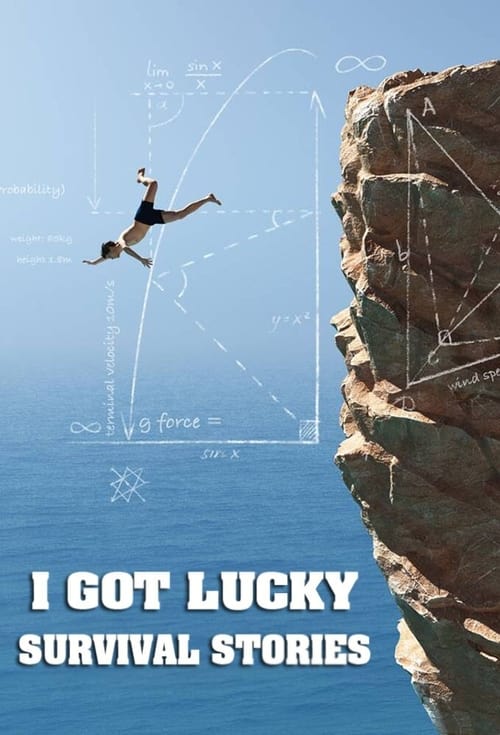
Explore some of the most death-defying accidents caught on film. Survivors and eyewitnesses explain what went wrong and a panel of experts dissect the scientific principle behind these
2021
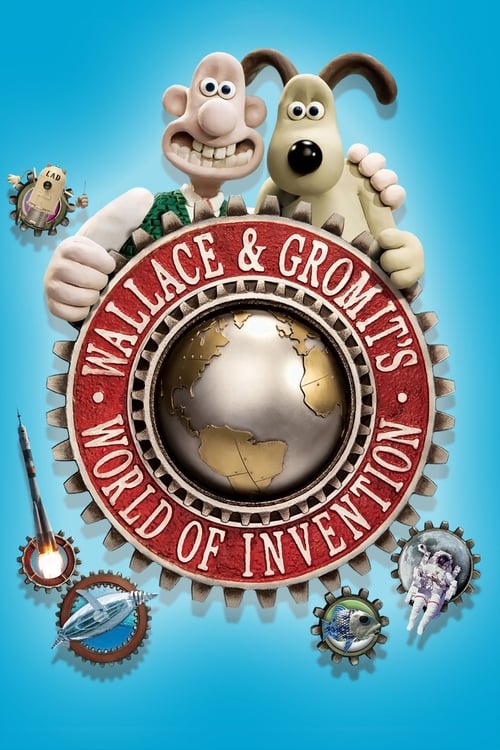
In the series, "Wallace will take a light hearted and humorous look at the real-life inventors, contraptions, gadgets and inventions, with the silent help of Gromit. The series aims to inspire a whole new generation of innovative minds by showing them real, but mind-boggling, machines and inventions from around the world that have influenced his illustrious inventing career" (the BBC press statement). Peter Sallis reprised his role as the voice of Wallace. The filmed inserts are mostly narrated by Ashley Jensen, with one in each episode presented in-vision by Jem Stansfield. John Sparkes also voices a portion in the unseen character of archivist Goronwy.
2010
The series investigates Paolo Macchiarini’s claims to have invented a ground-breaking method to create new organs. His method using plastic tracheas sown with stemcells has been operated on patients in the US, Russia, Sweden and the UK. So far, unfortunately, the track record of his plastic organs is not very good. Almost all patients are dead. And several of his former surgeon colleagues in Sweden claim that not only does the method not work, but that his scientific claim to fame is based on falsified and misrepresented data. Some even claim that his patients have been used as human guinea-pigs.
Pandora's Box is a six-part 1992 BBC documentary television series which examines the consequences of political and technocratic rationalism. The episodes deal, in order, with communism in The Soviet Union, systems analysis and game theory during the Cold War, economy in the United Kingdom during the 1970s, the insecticide DDT, Kwame Nkrumah's leadership in Ghana during the 1950s and 1960s and the history of nuclear power.
1992
The Human Body is a seven-part documentary series that looks at the mechanics and emotions of the human body from birth to death.
1998
Professor Robert Winston presents a series investigating the natural instincts inherent in people, covering survival, procreation, the drive to succeed and the heroic impulse.
2002
Dr Adam Rutherford explores the consequences of one of the biggest scientific projects of all time - the decoding of the entire human genome.
2011