Season 1 · Episode 1
Omnibus is an American, commercially sponsored, educational television series.
No description available.
The program has five segments: (1) "The Trial of Ben Jonson" (play), (2) "Jean Sibelius" (celebration of the composer's 87th birthday), (3) "The Dagger" (showing of a 1952 film ballet short), (4) "Rowland Emett" (the cartoonist displays some of his ingenious whimsical inventions), and (5) "Slow motion and High-Speed Photography" (feature).
The program has three segments: (1) "The Trial of Mr. Pickwick" (Dickens-based story), (2) "Agnes DeMille's 'Rodeo' " (dance episode from the ballet), and (3) "Palle Alone in the World" (showing of a 1949 Swedish fantasy film).
The program has five segments: (1) "My Brother Henry" (J.M. Barrie story), (2) "Walt Disney's 'Peter Pan' " (film preview), (3) "Pictures at an Exhibition" (dance interpretation of Moussorgsky's suite for orchestra), (4) (Leopold Stokowski conducts Christmas carol singers), and (5) "William Faulkner" (interview with the prize-winning novelist).
The program has five segments: (1) "Vive!" (story), (2) "The Servant with Two Masters" (play), (3) "Raymond Loewy" (the industrial designer discusses examples of his work), (4) "Barn Dance" (ingenious use of time-lapse photography and film editing to produce dance effects), and (5) "The Haircut" (comedy feature).
The program has six segments: (1) "The Oyster and the Pearl" (TV play), (2) "Wheat Germ" (time-lapse photography feature), (3) "Rospigliosi Cup" (exhibition of the famous decorative ornament made in gold and enamel, displayed at the Metropolitan Museum of Art), (4) "Under the Bridges of Paris" (showing of a 1952 French ballet presentation), (5) "La Boheme Preview" (interview with cast members in rehearsal for the next edition's scheduled production), and (6) "Radar" (feature on equipment and supplies).
The program has three segments: (1) "Arms and the Man" (staging of George Bernard Shaw's play), (2) "Manufacturers - Machines and People" (a look at manufacturing processes), and (3) (Alistair Cooke summarizes Omnibus' first season).
A current affairs program that began airing on EBS in August 2021. Co-produced by the Ministry of Education, the National Institute for Lifelong Learning, and EBS, the program is part of the Korean MOOC (Korean Massive Open Online Course) program, which aims to disseminate world-class knowledge to the public amid the prolonged COVID-19 pandemic, which has widened the knowledge gap between classes and spread fake information on social media. Hear great thoughts from some of the world's leading minds right now, including Nobel Prize-winning economist Paul Krugman, Michael Sandel of What is Justice, and world-renowned conductor and pianist Daniel Barenboim.
2021
Academy Reincarnation (also known as Past Life Academy) is a web variety content based on the concept of a male protagonist from a web novel who was reborn from an idol to a student. With its host, TXT's Kang Taehyun, the show provides laughter and information at the same time, by attending various academies across South Korea.
2023
Courageous couples journey toward more pleasurable sex and deeper intimacy with help from Gwyneth Paltrow and a team of experts in this reality series.
Nestle Nido Young Stars is an above the line communication initiative by Nestle' Nido which aims to provide a platform where child nutrition, education, good parenting, motherly wisdom, grooming kids and result oriented tips for nurturing are brought into focus. It is 25 minute weekly talk show, 78 episodes, based program focusing on ' how to raise high performing children.' Each show focuses a family, which is considered to be a star family, child for his/her achievements, and the parents for brining up their child in such manner. A package containing the pictures, certificates of achievements, daily routine, parents, teachers & friends talking about the kid, etc. There is a nutritionist and an educationist in the show to talk about the topics of the day and to give tips to the audience about their children. A question & answer session is carried live on the set and also the emails are taken. A celebrity is there in the show as role model.
—
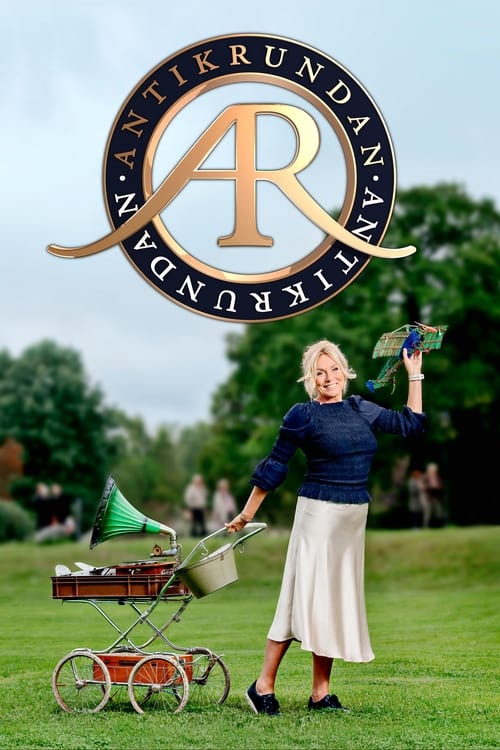
Antikrundan is the Swedish version of the original BBC format Antiques Roadshow. The show visits different locations in Sweden and lets people bring their antiques to be valued by experts. It remains popular and often has more than 2 million viewers. The 19th season was shown in 2009. Most of the experts have been with the programme since the start. Jesper Aspegren was the original host. He left in 1999 and was succeeded by Anne Lundberg. Antikrundan started out as a coproduction between SVT Malmö and the BBC where the Antiques Roadshow would visit Scandinavia for two programmes. Antikrundan premiered in August 1989 on TV2 and has since been shown on SVT every year. Antiques Roadshow is shown on BBC Lifestyle and TV8 in Sweden.
1989
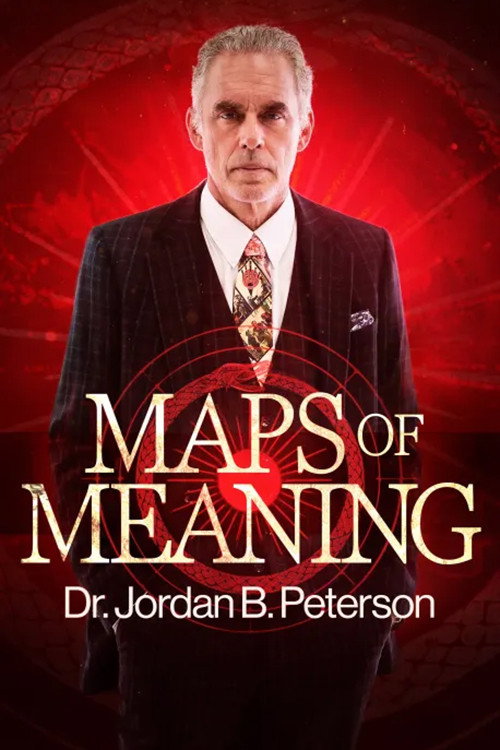
In Maps of Meaning, a twelve-hour course, Dr. Jordan B. Peterson explores the foundations of human consciousness, perception, and the pursuit of meaning. Drawing from psychology, mythology, and neuroscience, he examines how we navigate the tension between order and chaos—not as passive observers, but as active participants guided by goals and values. Central to this exploration is the archetypal hero’s journey, which shows how voluntarily confronting suffering and taking responsibility can transform both the individual and society. Grounded in decades of research and personal experience, Dr. Peterson reveals how religious symbols, archetypal narratives, and social hierarchies shape both the individual mind and collective culture. Through powerful insights, the course demonstrates that proper orientation toward the highest good enables us to transform chaos into meaningful order.
2025
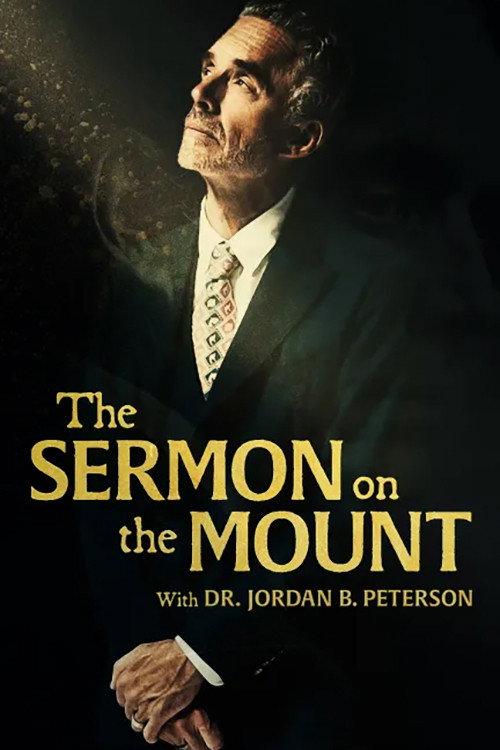
In The Sermon on the Mount, an eight-hour course, Dr. Jordan Peterson explores the profound wisdom and symbolism embedded in this foundational biblical text, highlighting the transformative power of living by Christ-like principles. He offers a deep dive into key passages, such as the Beatitudes and the Lord’s Prayer, emphasizing the importance of humility, self-reflection, and the pursuit of meaning when facing life’s challenges. Throughout the lectures, Dr. Peterson masterfully integrates biblical narratives, Jungian psychology, and personal stories, illustrating the enduring relevance of these teachings for navigating the complexities of the human experience.
2026
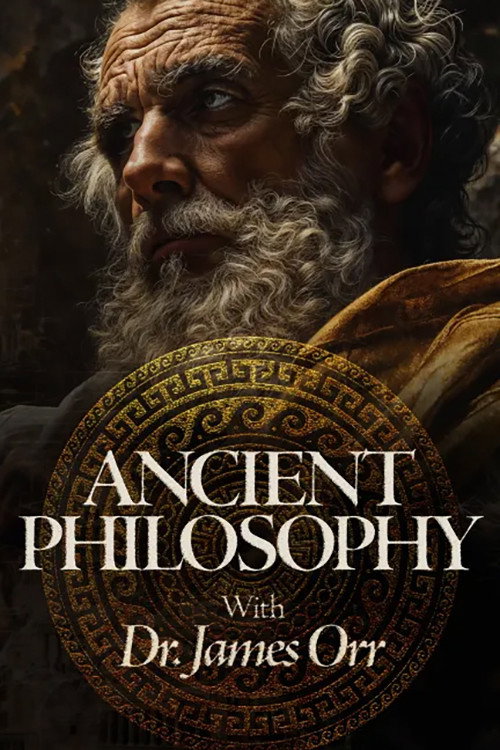
In Ancient Philosophy, a seven-hour course, Dr. Orr takes us on an exploration of the rich history of ancient Greek thought, beginning with the foundational ideas of the Ionian and Eleatic schools and voyaging through the transformative philosophies of Plato and Aristotle. The course also examines the emergence of Stoicism and Epicureanism during the Hellenistic period, emphasizing their distinct approaches to ethics, nature, and the human condition. Throughout the course, we trace the evolution of pivotal concepts in metaphysics, epistemology, and ethics that have shaped Western thought for millennia, underscoring the enduring relevance and transformative power of ancient Greek philosophy in modern times.
In Introduction to Nietzsche, an eight-hour course, Dr. Peterson embarks on a deep exploration of the life, philosophy, and enduring influence of Friedrich Nietzsche. Set against the backdrop of the late 19th century, we examine how Nietzsche's ideas challenged traditional moral and philosophical foundations, paving the way for new perspectives on the human condition. The course delves into key concepts such as the will to power, the critique of truth and morality, and the affirmation of life in the face of nihilism, while also exploring Nietzsche's complex relationship with religion, academia, and the works of other thinkers. Ultimately, we are invited to confront uncomfortable realities, embrace necessary struggles, and cultivate the courage and gratitude needed to realize our full potential.
In Monetary Theory, a nine-hour course, Dr. Lawrence White explores the debate between market-based and government-controlled monetary systems, combining theory with historical evidence from gold standards to modern fiat currencies. We examine how money can emerge through market forces, the mechanics of fractional-reserve banking, and how central banks influence inflation. The course also addresses banking stability, market failure arguments, and the causes of inflation, including seigniorage. It concludes by evaluating monetary policy rules, inflation targeting, and alternatives like Bitcoin, and asks whether sound money requires commodity backing or if proper institutional design can achieve stability in fiat systems.
In The Philosophy of Science, an eight-hour course, Dr. James Orr traces the development of science from ancient Greece through the Scientific Revolution to today. He examines how theological, institutional, and philosophical forces shaped science, while tackling key issues like the demarcation problem of science versus pseudoscience, Hume’s problem of induction, Kuhn’s theory of paradigm shifts, and the realism debate. The course also engages fascinating unresolved questions raised by cosmology, neuroscience, and quantum mechanics, ultimately arguing that scientific progress does not eliminate philosophical inquiry but rather deepens it, revealing new mysteries that demand philosophical analysis.
Is the modification of the human genome ethical? Is sustainable consumption at a low price possible? Are food intolerances just a passing trend? Professor of psychology Bertolt Meyer discusses controversial issues with specialists.
1973
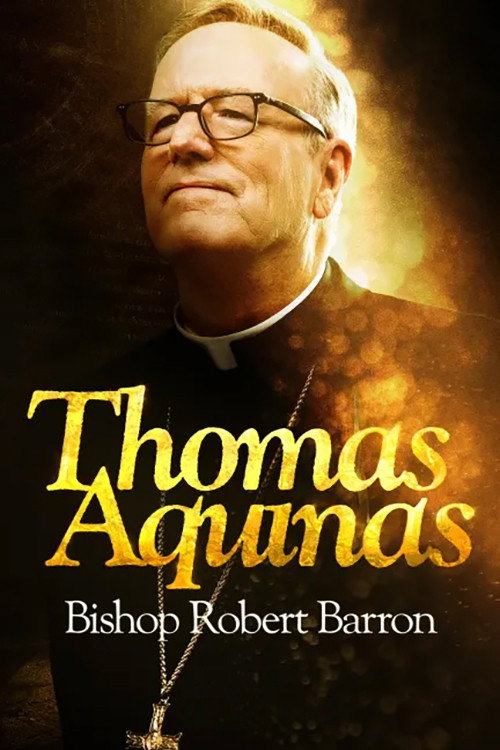
In Thomas Aquinas, a seven-hour course, Bishop Robert Barron guides us through a study of the theological and philosophical system of Thomas Aquinas, the 13th-century Dominican friar who masterfully synthesized Ancient Greek philosophy with Christian doctrine. We examine his Five Ways for demonstrating God's existence, his understanding of divine attributes and the Trinity, and his teachings on creation, providence, and the problem of evil. The course delves into Aquinas's philosophical anthropology, particularly the relationship between body and soul and humanity's creation in God's image. We conclude by studying his ethical framework centered on finding happiness in God as humanity's ultimate goal, and the role of virtues in ordering human life toward God.
In Free Market Economics, Dr. David Henderson guides us through ten foundational pillars of economic wisdom and the major schools of thought—Austrian, Chicago, UCLA, and Public Choice. Along the way, we explore how markets coordinate through decentralized knowledge, property rights, and voluntary exchange, and why central planning so often falls short. Drawing on vivid historical cases—from the Soviet economic collapse to West Germany’s postwar miracle—the course brings core ideas like subjective value, spontaneous order, and entrepreneurial discovery to life. Ultimately, it shows how economic freedom and open inquiry fuel innovation and prosperity, while government intervention frequently produces unintended consequences and inefficiencies.
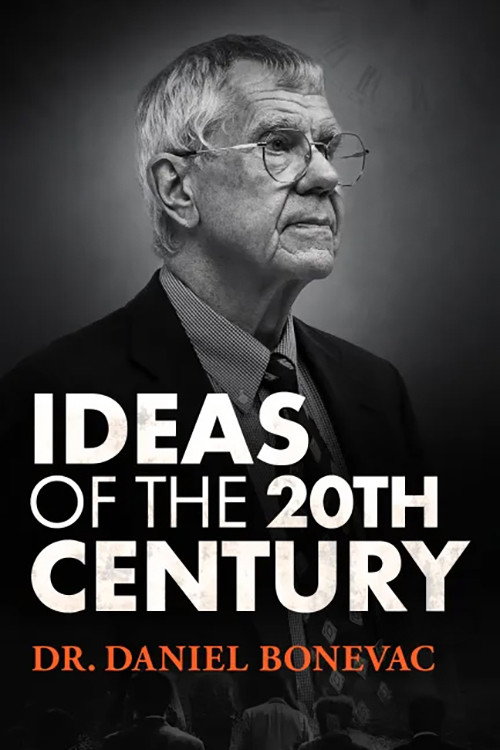
In Ideas of the 20th Century, Dr. Daniel Bonevac examines the major intellectual movements that shaped modern Western thought. Beginning with the Scientific, Agricultural, and Industrial Revolutions, the course explores how traditional beliefs came under pressure, creating tensions between human freedom and scientific determinism and contributing to cultural and political upheavals. Through the ideas of thinkers such as Nietzsche, Marx, Freud, and the existentialists, as well as debates over totalitarianism, liberty, language, truth, and justice, the course traces the search for meaning in the modern world. By connecting philosophy, politics, and culture, it reveals how the central ideas of the 20th century continue to shape contemporary society and the challenges facing Western civilization today.