Season 2015 · Episode 1
David Kaplan explores one of the biggest mysteries in physics: the apparent contradiction between general relativity and quantum mechanics.
A wide-ranging interview with the legendary mathematical physicist Freeman Dyson in which he discusses his work with Richard Feynman, his attempts to build a spaceship propelled by nuclear bombs and his controversial views on climate change.
A video profile of the mathematician Artur Avila, whose solutions to ubiquitous problems in chaos theory have earned him Brazil’s first Fields Medal in 2014.
A video profile of the 2014 Fields medalist Manjul Bhargava, whose search for artistic truth and beauty has led to some of the most profound recent discoveries in number theory.
Where did the universe come from? David Kaplan explores the leading cosmological explanation with the help of a baking metaphor.
The opening scene from George Csicsery’s film "Counting From Infinity," about Yitang Zhang, a previously unknown mathematician who two years ago solved a major problem in number theory that catapulted him to mathematical stardom.
A video profile of the 2014 Fields medalist Martin Hairer, whose epic masterpiece in stochastic analysis, experts say, “created a whole world.”
A video profile of the 2014 Fields medalist Maryam Mirzakhani, whose monumental work draws deep connections between topology, geometry and dynamical systems.
A video profile of the 2014 Nevanlinna Prize winner Subhash Khot, whose bold conjecture is helping mathematicians explore the precise limits of computation.
In an infinitely branching multiverse, says MIT cosmologist Alan Guth, “there are an infinite number of one-headed cows and an infinite number of two-headed cows. What happens to the ratio?”
University College London physicist Hiranya Peiris explains the seemingly impossible -- how the multiverse can be experimentally tested.
In this 2-minute video, David Kaplan explores the leading theories for the origin of life on our planet.
Benjamin de Bivort’s lab at Harvard University developed a device called the fly-vac to study individual behavior. Upon entering a chamber, the fly must choose to walk toward the light or dark end. A vacuum then sucks it back to the starting point, and it makes the choice again.
In a device in Benjamin de Bivort’s lab at Harvard University, a fly wanders through a tiny Y-shaped maze, choosing at the Y’s vertex whether to walk left or right. This array of Y-mazes allows researchers to track individual behavior in many flies simultaneously.
In this 2-minute video, David Kaplan explains how the search for hidden symmetries leads to discoveries like the Higgs boson.
James Bullock, a physicist at the University of California, Irvine, explains why dark matter might be more complicated than astronomers have assumed.
Nancy Moran, a biologist at the University of Texas at Austin, explains how colony collapse disorder led her to study the bacteria that live in the guts of bees.
Nima Arkani-Hamed, a physicist at the Institute for Advanced Study, makes his "big-picture" case for building a 100-TeV particle collider.
David Kaplan explains why a simple definition of 'species' is hard to come by in our fifth In Theory video.
Gabriela González explains how to measure black-hole collisions using gravitational waves.
Joan Strassmann explains the benefits of studying social amoebas.
Christoph Adami explains how information theory can explain the persistence of life.
Richard Dawid discusses the fine line between science and speculation.
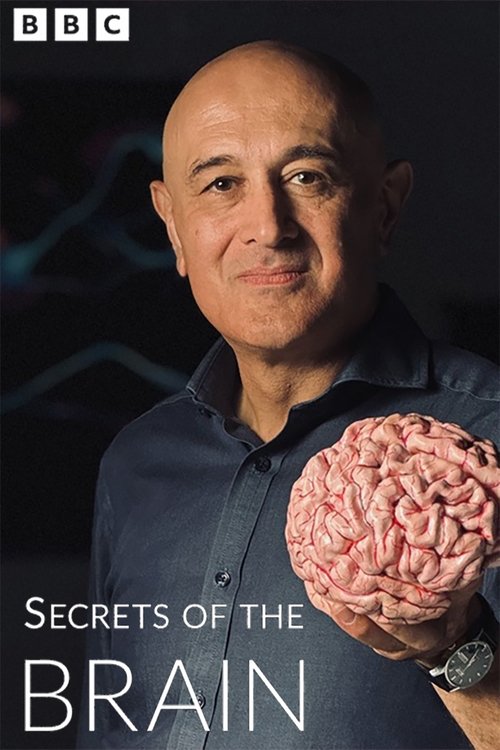
Professor Jim Al-Khalili unravels the mysteries of arguably the most complex object in the cosmos: the human brain.
2025
From the planets to the stars and out to the edge of the unknown, history and science collide in a wondrous yet deadly adventure through space and time.
2007
With the help of industry experts, this innovative docuseries examines new and emerging technological trends to imagine revolutionary possibilities.
2022
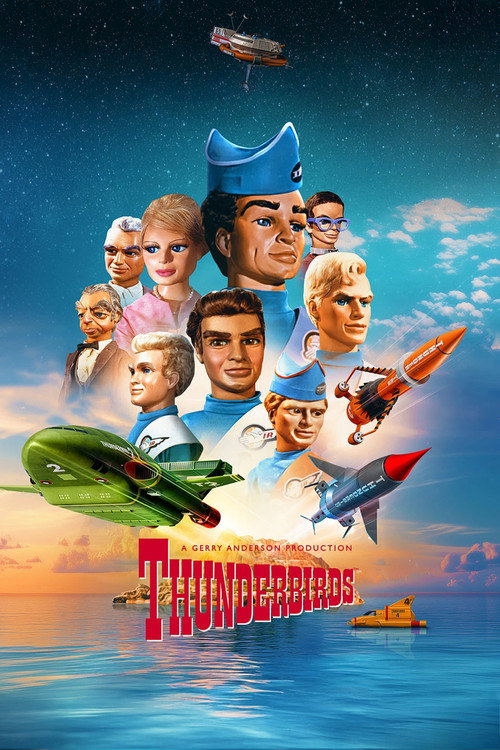
Thunderbirds is a 1960s British science-fiction television series which was produced using a mixed method of marionette puppetry and scale-model special effects termed "Supermarionation". The series is set in the 21st century and follows the exploits of International Rescue, a secret organization formed to save people in mortal danger with the help of technologically advanced land, sea, air and space vehicles and equipment, launched from a hidden base on Tracy Island in the South Pacific Ocean.
1965
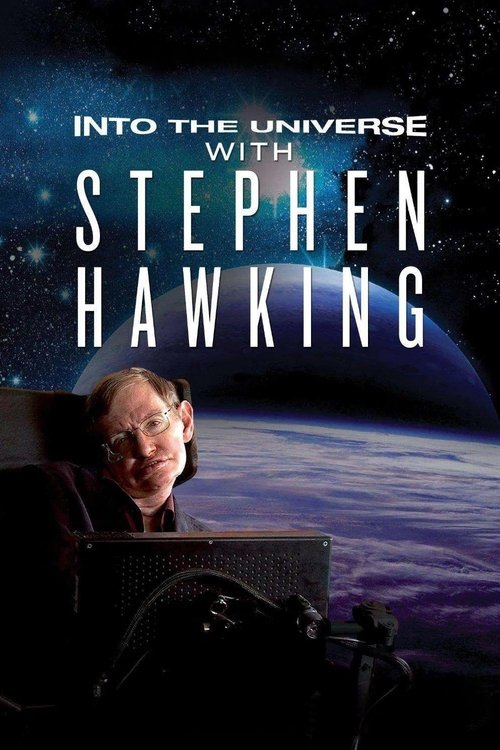
Hawking gives us the ultimate guide to the universe, a ripping yarn based on real science, spanning the whole of space and time -- from the nature of the universe itself, to the chances of alien life, and the real possibility of time travel.
2010
How We Invented the World is the ultimate action-packed, hi-energy, landmark series that examines the four inventions that define the modern world - mobiles, cars, planes and skyscrapers -celebrating the people and connections that made them possible. Each playing a crucial role in where we are now in the 21st Century - able to travel the globe, to talk to one another at any time at the push of a button, to live in huge cities, to commute, to capture the world we live in, making the fantasies we create come to life. This four part series lifts the lid on how these iconic inventions came to be. Showcasing the people who have shaped our lives in ways that they could have never imagined or anticipated, this series reveals stories of human ingenuity, extraordinary connections, unprecedented experimentation and jaw dropping accidents that created the world as we know it.
2012
No description available.
2000
Engineering enthusiasts battle to create the most ingenious contraption using everyday objects. Teams are challenged to fabricate and demonstrate a new chain reaction machine before being judged on their ingenuity, design, and workmanship.
Explore the impact of A.I. and how it is transforming the way we live and work -- both now and in the future, featuring some of the brightest minds in science, philosophy, technology, engineering, medicine, futurism, entertainment and the arts to tell the dynamic story of A.I.
2019
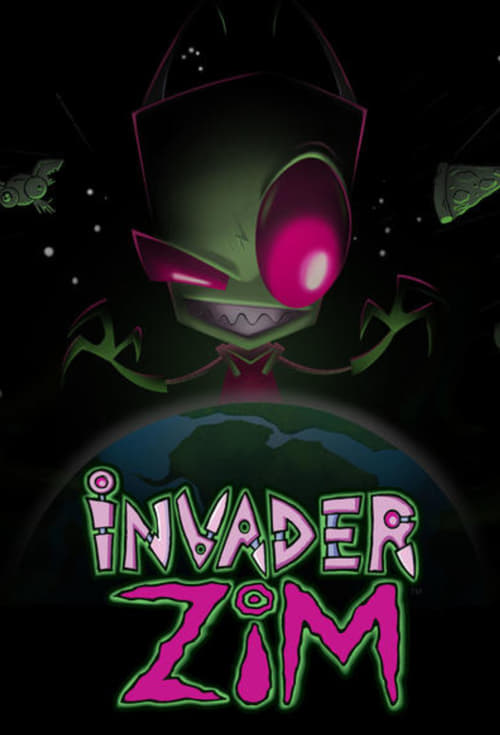
Zim dreams of greatness. Unfortunately, though, he's hopelessly inept as a space invader. Desperate to be rid of the annoying Zim, his planet's leaders send him on a mission to infiltrate Earth, providing him with leftover, cobbled-together equipment. To their consternation, Zim succeeds in setting up a base on Earth and infiltrating human culture, posing as a human child as he plots the planet's downfall. Only Zim's archnemesis, Dib, recognizes that Zim is an alien, and of course, nobody believes Dib's claims.
2001
100 miles south of Atlanta, Dr. Hodges and Dr. Ferguson are two longtime friends who own and operate Critter Fixer Veterinary Hospital. Together with their loving staff, Drs. Hodges and Ferguson treat and care for over 20,000 patients. Between emergency visits to the office, and farm calls throughout rural Georgia - the Critter Fixers are constantly bombarded with unique cases you only see in the country.
2020
A look at rock 'n' roll's technological inventions and innovations.
2017
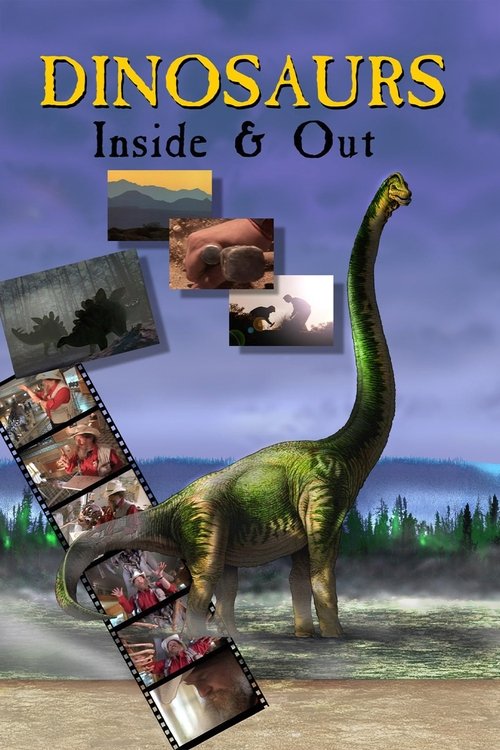
Extinct for millions of years, dinosaurs continue to fascinate as scientists struggle to understand the creatures that went from domination to extinction seemingly overnight. This four-part documentary series attempts to provide some answers. From the badlands to the Yucatán Peninsula, paleontologists scour the earth to learn about the predatory habits of carnivorous dinosaurs, the land area required to feed a large sauropod and much more.
1997
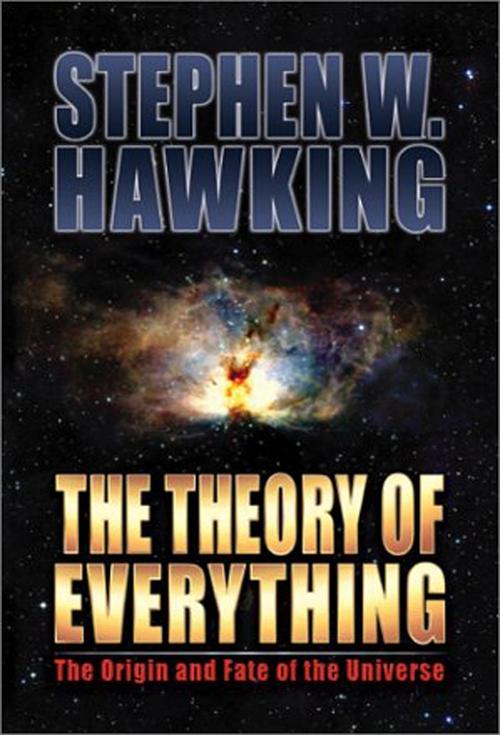
Join Stephen Hawking and other renowned thinkers as they explore the revolutionary new ideas that have evolved since the publication of his blockbuster book. Besides interviews, this stimulating documentary uses computer graphics and simple, easy-to-understand demonstrations to explain complex concepts. Topics include black holes, string theory, supersymmetry, dimensions beyond our perception, and the mysterious M force; all potential keys to unlocking the elusive "theory of everything" that seems so tantalizingly close.
2008
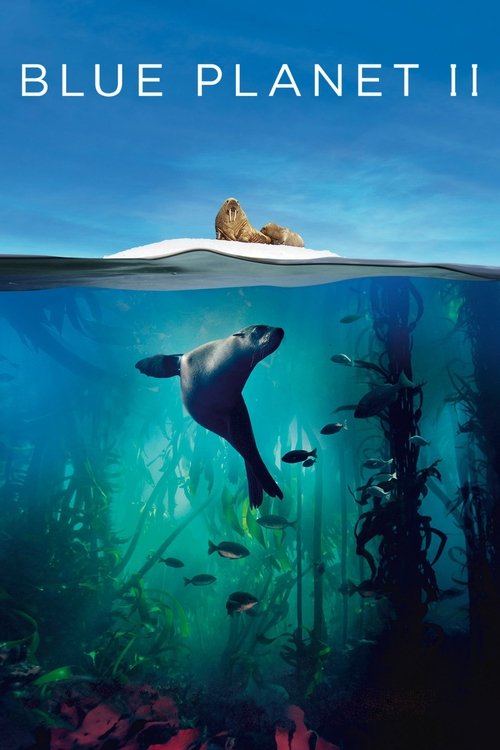
There is nowhere more powerful and unforgiving yet more beautiful and compelling than the ocean. Join us and explore the greatest yet least known parts of our planet.
The Bell System Science Series consists of nine television specials made for the AT&T Corporation that were originally broadcast in color between 1956 and 1964. Marcel LaFollette has described them as "specials that combined clever story lines, sophisticated animation, veteran character actors, films of natural phenomena, interviews with scientists, and precise explanation of scientific and technical concepts — all in the pursuit of better public understanding of science.
1956