Season 1 · Episode 1
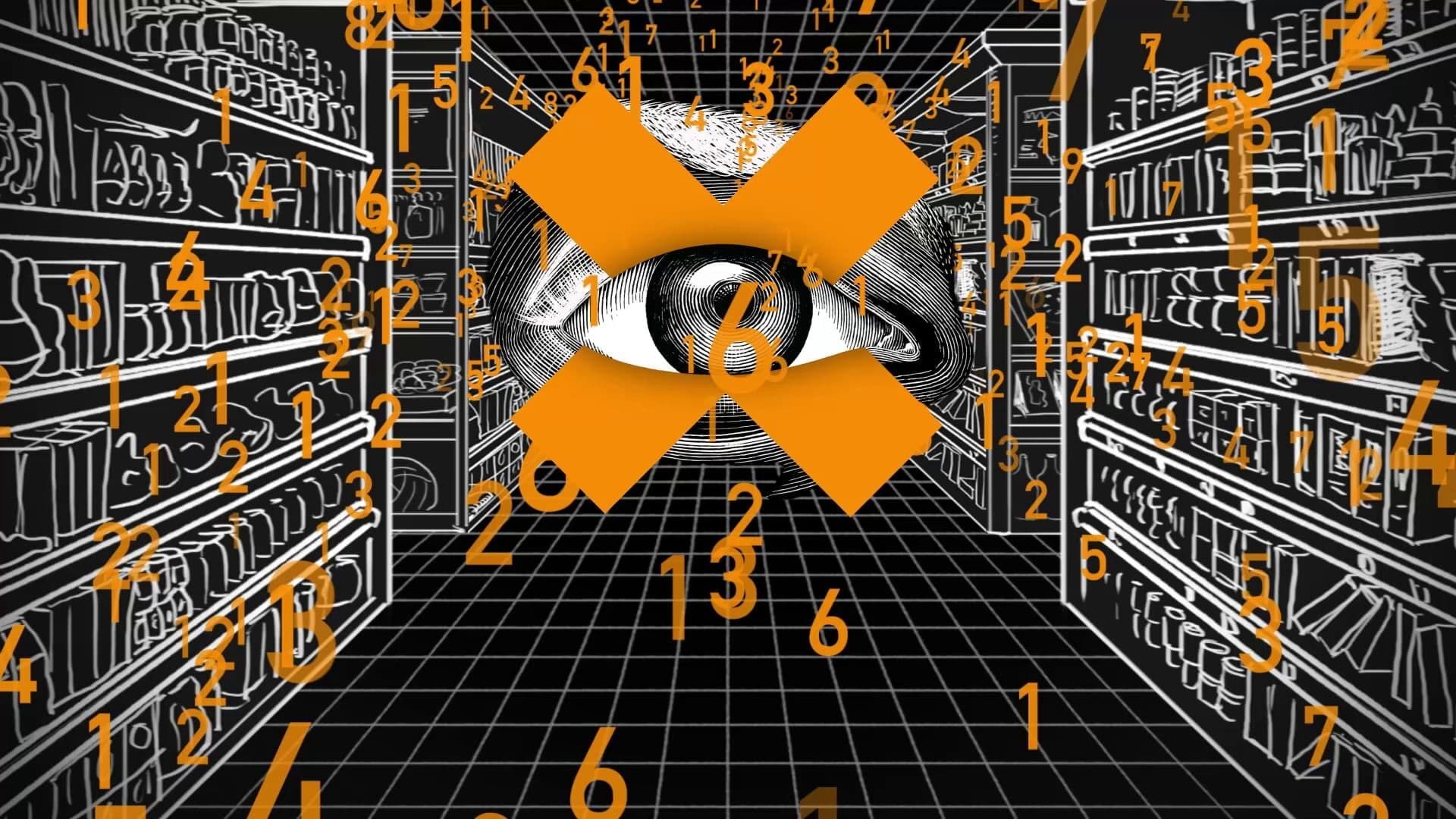
Frank Benford observed that the number one seems to pop up a lot in both in the supermarket and on tax bills. In understanding this law, it helps to simply look at the world from a different perspective.
Speed is such a common term that it's easy to forget how much of a role maths plays in understanding it. Until three or four centuries ago, there was no speed at all. It was only since the Renaissance that the concept of movement crept into the world of mathematics, thanks to calculus and Isaac Newton.
A circle is also a triangle and a triangle is a square. Sound impossible? Not in the realm of topology, which even applies to 3-dimensional spaces and anything from donuts, UFOs and potatoes. The discipline's inventor, Henri Poincaré, created one of the most difficult problems in mathematics.
In this episode of our travels in the land of maths, we are heading towards Infinity. And even beyond, because infinity comes in many sizes. That may seem strange, but Georg Kantor and his set theory will help us come to terms with this maths concept of dizzying scale.
In this episode, we look at the relationship between maths and truth. Maths is meant to be certain, either right or wrong. Turns out, it’s not that simple. For Gödel's theorem has proved that there are “undecidable” theories, which one can neither prove nor disprove.
Two prisoners must choose between cooperation and betrayal without consulting each other. This famous prisoner's dilemma that will take us to the heart of game theory. We think mathematically about a very philosophical question: is it in our interest to collaborate with others?
In October 1970 Scientific American magazine introduced a game under the heading “Mathematical Games” that quickly became a cult classic. The idea behind John Conway’s “Game of Life” is cellular automaton. The game’s creator hoped to help with the understanding, simulating or even recreation of life itself.
25 centuries ago, the well-ordered world of natural integers and fractions had to expand to accommodate monsters like π and √2. It's a dizzying mathematical expedition where we will realise that real life numbers are only the tip of the iceberg.
We have known for a long time that some equations can't be solved as the answers are numbers that don't exist. Fortunately, a slew of mathematicians have uncovered a new field of numbers that now play a vital role in modern mathematics.
End of the trips in the land of math with an arduous hike. It is better to be strong on the complex plane. Because it is about an unsolved mystery of mathematics, namely: the distribution of prime numbers. Riemann made a hypothesis considered as valid but still not proven, that is to say that it is not a walk in the park. Let's go slowly...
No description available.
2001
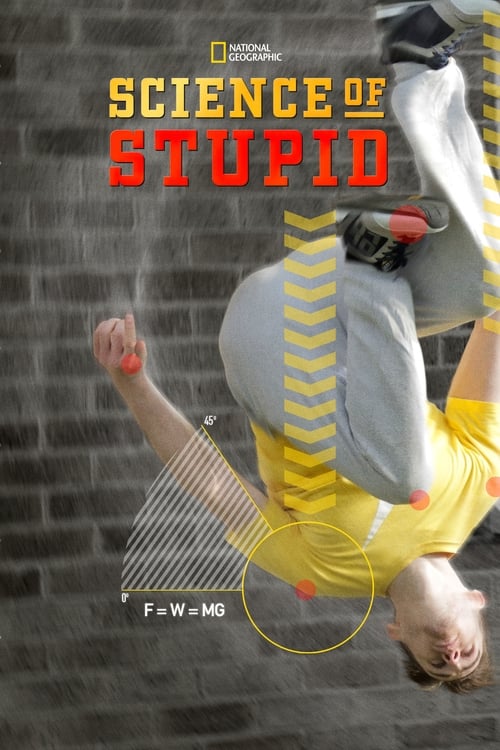
This show combines cold hard science with some of the craziest, most spectacular and painful user generated clips ever recorded. Richard Hammond introduces all manner of mishaps featuring brave, if misguided individuals from around the world and then explains the science behind their failure and humiliation with the use of bespoke animations and super slo-mo cinematography. Every episode features between 50 and 60 clips of misadventure – ordinary folk making extraordinary mistakes. Each week watch stunts involving weightlifting, shooting guns or jumping over cars, that have gone wrong, paused, re-wound, and re-played and analysed to determine exactly what went wrong and why. Richard explains the physics, chemistry and biology at play, then presents forensic details to explain the stupidity that resulted in failure. He’ll look at everything including weight, volume, momentum, combustion and even how the brain operates. This is misadventure explained. This is the Science of Stupid.
2014
Professor Moustache and his assistant Nathanaël go the extra mile to answer your questions scientifically. Do we really eat spiders in our sleep? Can we shrink children just like in a film? And what happens when a murder happens in space? All your queries are resolved by our favourite knowledgeable professor.
2015
Vetenskapens värld is a popular science TV documentary program broadcast on Swedish Television (SVT).
1971
For more than 2,000 years, a mathematical riddle has baffled the world’s greatest minds. It’s a problem of such difficulty that it has tormented those brave enough to tackle it. Some have given up in despair. Others have been driven mad. Primes are fundamental to mathematics yet they seem to surface entirely randomly along the number line. But are the primes truly random or is there some hidden pattern? It’s the greatest unsolved problem of mathematics. In The Music of the Primes, Marcus du Sautoy investigates the fascinating story of great mathematicians who have all grappled with the problem of the primes
2005
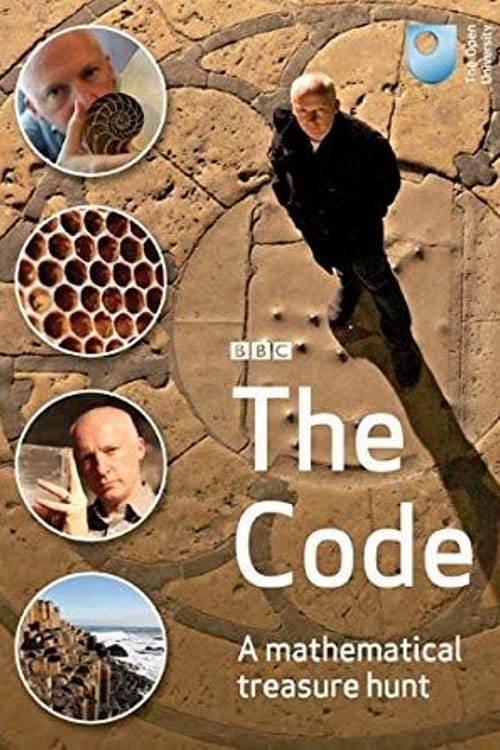
Solve The Code and find a real-life treasure! The Code is a three-part TV series about maths in the world around us, presented by Marcus du Sautoy. Why do bees make hexagonal honeycomb? Who is in charge of the flight of a flock of swallows? How can dozens of wrong answers make a correct one? Join Marcus on an exciting journey to discover The Code!
2011
2004
Documentary series in which Dr Hannah Fry explores the mystery of maths. Is it invented like a language or is it discovered and part of the fabric of the universe?
2018
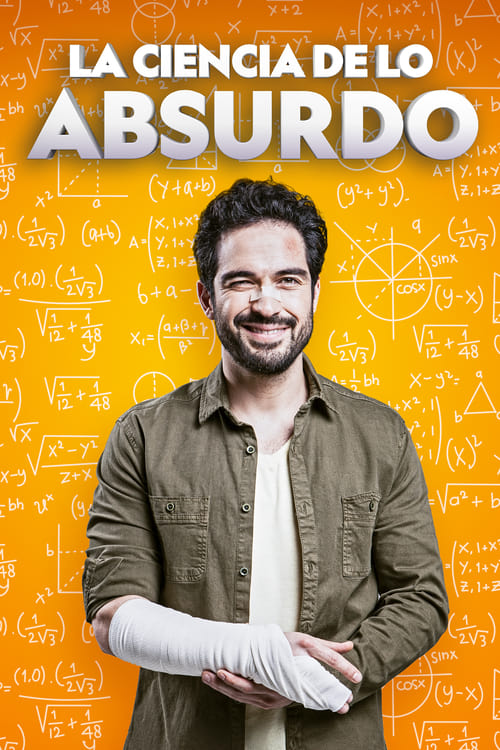
Hosted by Mexican TV personality Alfonso "Poncho" Herrera, this series combines hard data and scientific observations with some of the most outrageous, hilarious and spectacularly painful bloopers ever recorded on video.
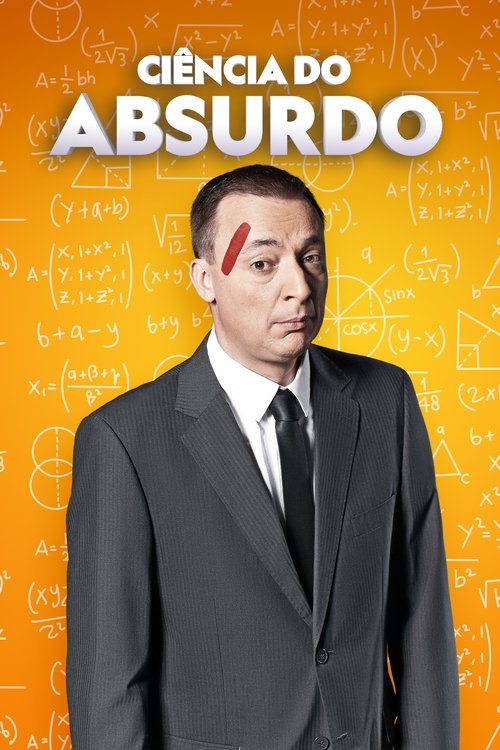
Hosted by the local comedy talent Paulo Bonfá, this brazilian version of "Science of Stupid" combines science with some of the most insanely spectacular and painful bloopers ever captured by amateurs.
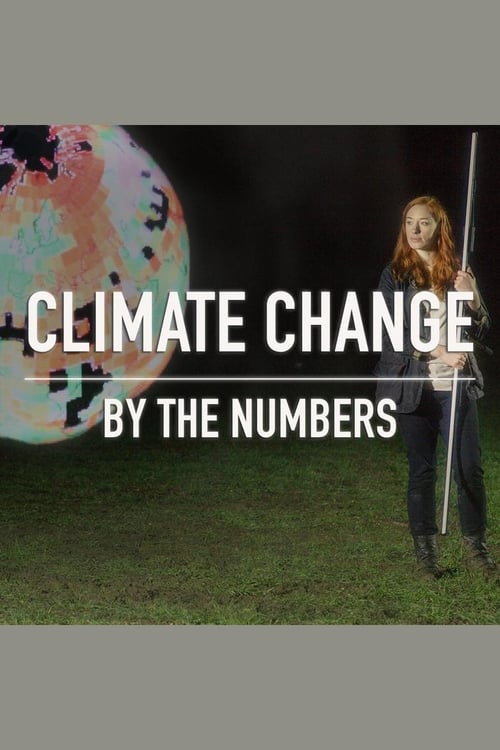
Earth's climate is changing - understanding how has become one of the biggest scientific projects ever undertaken.
The history of our modern Indo-Arabic numeral system begins in Mesopotamia, leads through India to the Arab world – and from there around the globe. This three-part series explores how the "Arabic numerals" began their triumphant march and the special role that zero played in this process. From its beginnings to modern computer science – today, numbers are the universal language of the world.
2025
Science of Stupid reveals through science experts exactly how & why adventures turn to misadventures.
Hosted by Jochen Schropp, this series combines hard data and scientific observations with some of the most outrageous, hilarious and spectacularly painful bloopers ever recorded on video.
Science of action is described in several different daily routine activities like sports, stunts, adventures, and things that should not be done at home. This series shows videos of people hurting themselves and explains the science behind them.
Hosted by Argentine television personality Alejandro Marley, this series combines hard data and scientific observation with some of the most outrageous, hilarious and spectacularly-painful bloopers ever recorded on video.