K
HomeMoviesTVSearchRandom
KKINORA

This website does not retain any files on its server. It provides movie metadata and links to media hosted by third-party services. Powered by the TMDB API.

TrendingSearchMoviesTV ShowsTop RatedRandomNewest
© 2026 Kinora. Not affiliated with TMDB.Built with Next.js · Tailwind · Framer Motion
← Back to details
Now PlayingIn the Footsteps of Frantz Fanon

In the Footsteps of Frantz Fanon

★ 10.02021DocumentaryHistory

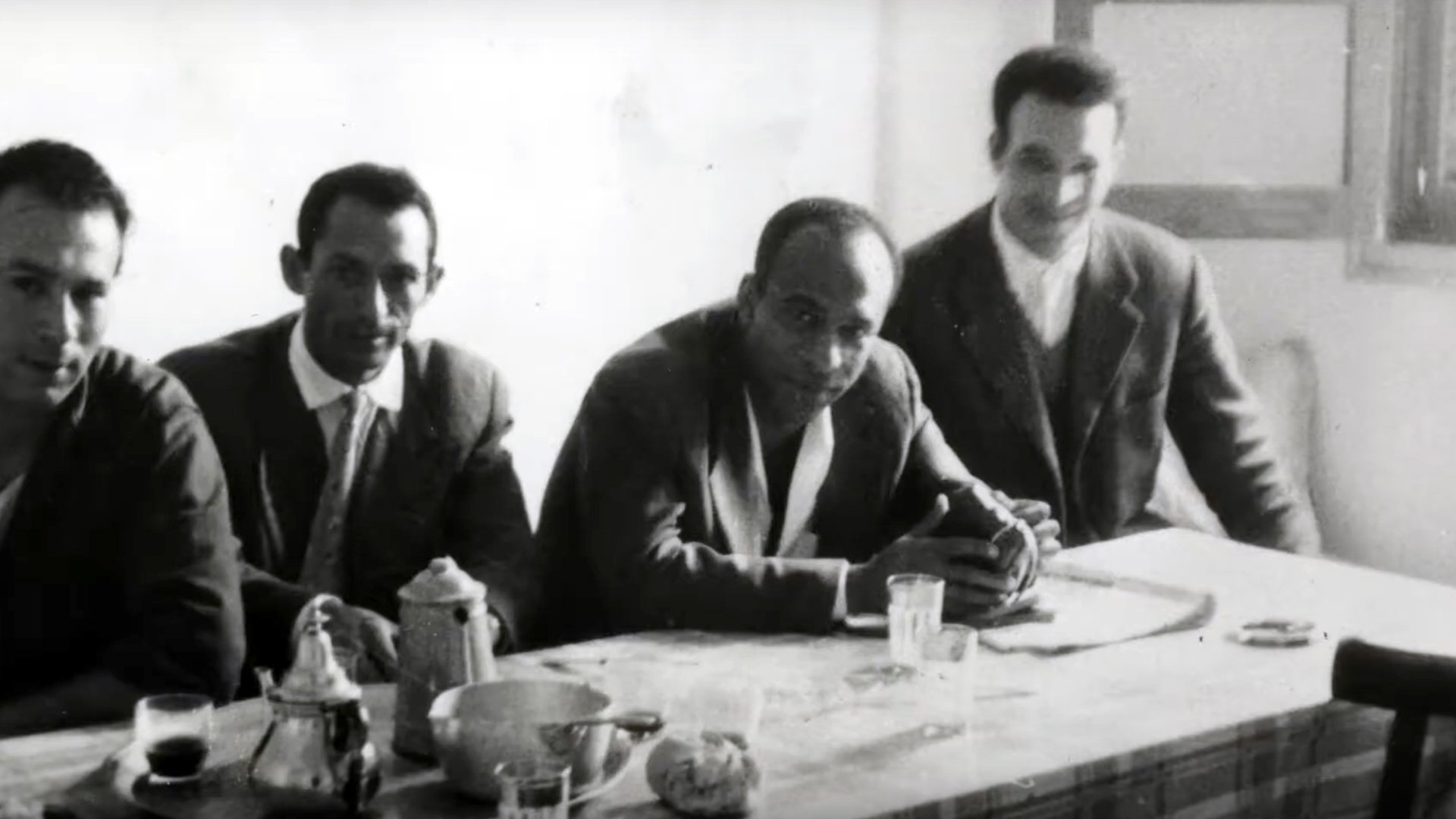
Who was Frantz Fanon, the author of Wretched of the Earth and Black Skin, White Masks, this Pan-African thinker and psychiatrist engaged in anti-colonialist struggles? Born in Martinique, Frantz Fanon was not yet 20 years old when he landed, weapons in hand, on the beaches of Provence in August 1944 with thousands of soldiers from "Free France", most of whom had come from Africa, to free the country from Nazi occupation. He became a psychiatrist and ten years later joined the Algerians in their fight for independence. Died at the age of 36, he left behind a major work on the relationships of domination between the colonized and the colonizers, on the roots of racism and the emergence of a thought of a Third World in search of freedom. 60 years after his death, the film follows in the footsteps of Frantz Fanon, alongside those who knew him, to rediscover this exceptional man.


🎞️More Like This

The Sorcerer's Apprentice
★10.0
Film

60 years ago, in the Algerian desert, an atomic bomb, equivalent to three or even four times Hiroshima, exploded. Named the “Blue Gerboise”, it was the first atomic bomb tested by France, and of hitherto unrivaled power. This 70 kiloton plutonium bomb was launched in the early morning, in the Reggane region, in southern Algeria, during the French colonial era. If this test allowed France to become the 4th nuclear power in the world, it had catastrophic repercussions. France had, at the time, certified that the radiation was well below the standard safety threshold. However, in 2013, declassified files revealed that the level of radioactivity had been much higher than announced, and had been recorded from West Africa to the south of Spain.

The Sorcerer's Apprentice

1996

The Panafrican Festival in Algiers
★6.0
Film

Festival panafricain d'Alger is a documentary by William Klein of the music and dance festival held 40 years ago in the streets and in venues all across Algiers. Klein follows the preparations, the rehearsals, the concerts… He blends images of interviews made to writers and advocates of the freedom movements with stock images, thus allowing him to touch on such matters as colonialism, neocolonialism, colonial exploitation, the struggles and battles of the revolutionary movements for Independence.

The Panafrican Festival in Algiers

1969

Un Combat Singulier
★10.0
Film

No description available.

Un Combat Singulier

2004

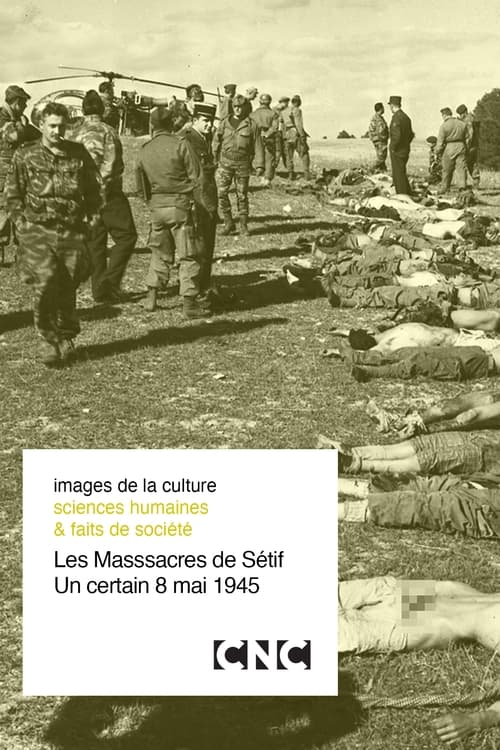
The Setif Massacres, a certain May 8, 1945
★10.0
Film

May 8, 1945, the day of victory over Nazism, is also a day of mourning. In Algiers, thanks to demonstrations for victory, the Algerian flag appears for the first time, thus claiming independence. But in Sétif, the standard bearer is shot dead at the head of the procession and a riot breaks out. The colonial massacre that followed would extend to all of Constantine. The commission of inquiry never delivered its conclusions and an amnesty law erased the traces of this savage repression. Fifty years later, the file is open.

The Setif Massacres, a certain May 8, 1945

1995

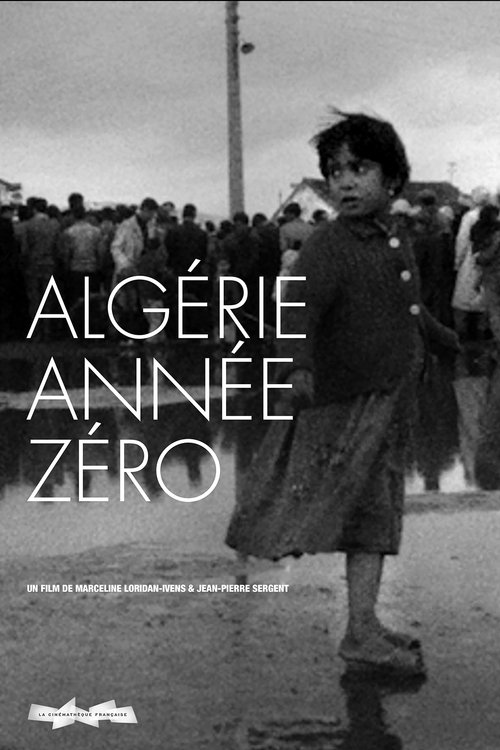
Algeria, Year Zero
★10.0
Film

Documentary on the beginnings of Algerian independence filmed during the summer of 1962 in Algiers. The film was banned in France and Algeria but won the Grand Prize at the Leipzig International Film Festival in 1965. Out of friendship, the production company Images de France sent an operator, Bruno Muel, who later declared: "For those who were called to Algeria (for me, 1956-58), participating in a film on independence was a victory over horror, lies and absurdity. It was also the beginning of my commitment to the cinema."

Algeria, Year Zero

1965

Manifesto of the 121
★10.0
Film

On September 5, 1960, the trial of about twenty French activists from the "Jeanson Network" began, supporters in the metropolis of the action of the Algerian FLN independence activists. But after a few days, the situation was reversed and the trial transformed into a political arena, it was the government, the army, their policy, it was the entire Algerian war whose trial began. Accused, witnesses, lawyers, overflowing a stunned court, transformed the courtroom into a tribune of the opposition. The trial coincided with the publication of the "Manifesto of the 121" on the right to insubordination, signed among others by Jean Paul Sartre, Arthur Adamov, Simone de Beauvoir, André Breton, Marguerite Duras, Pierre Boulez, René Dumont, François Chatelet…

Manifesto of the 121

2011

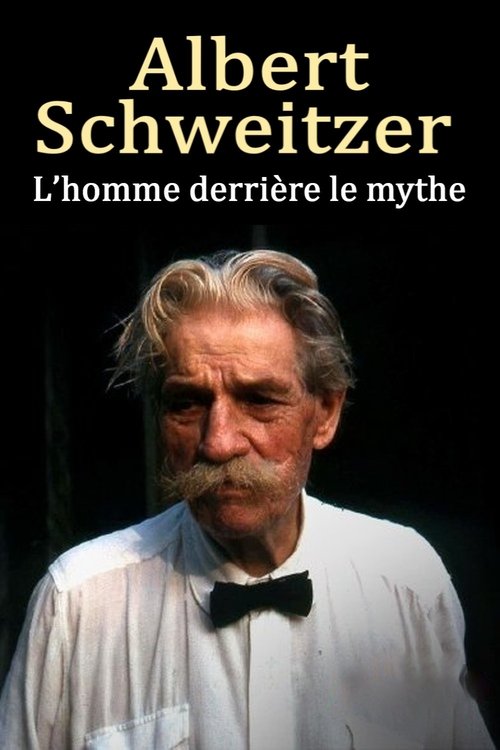
Albert Schweitzer - The Man Behind the Myth
★7.0
Film

A famous figure of the 20th century, Albert Schweitzer was a tireless humanist and polymath who opened a hospital in the Gabonese jungle to bring healthcare to remote areas. But today the legacy of the winner of the Nobel Peace Prize in 1952 is being scrutinised. How important was his wife Hélène in his success? And was the virtuous man also racist?

Albert Schweitzer - The Man Behind the Myth

2025

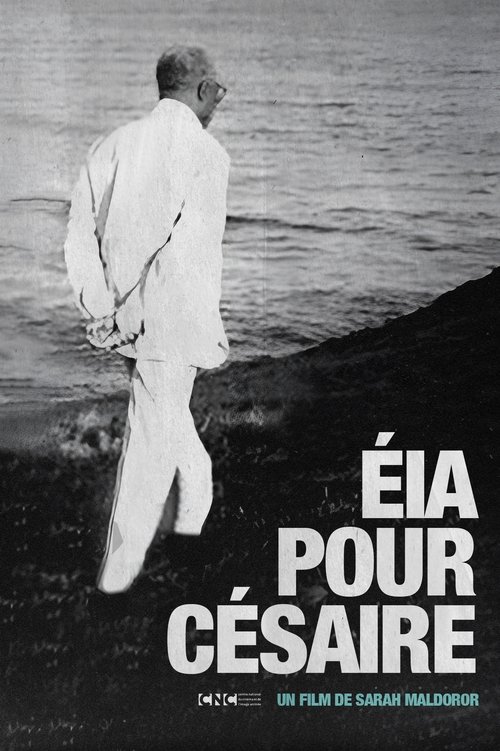
Papa Césaire
★10.0
Film

Shortly after his death in 2008, Maldoror made this film about her longtime friend and collaborator, the Négritude poet Aimé Césaire. In this film, she retraces the steps of Césaire’s travels across the globe — particularly back to his hometown in Martinique, where Maldoror interviews his relatives about his life — and her working relationship with Césaire, including fragments of her previous films about him, Un homme, une terre (1976) and Le masque des mots (1987).

Papa Césaire

2009

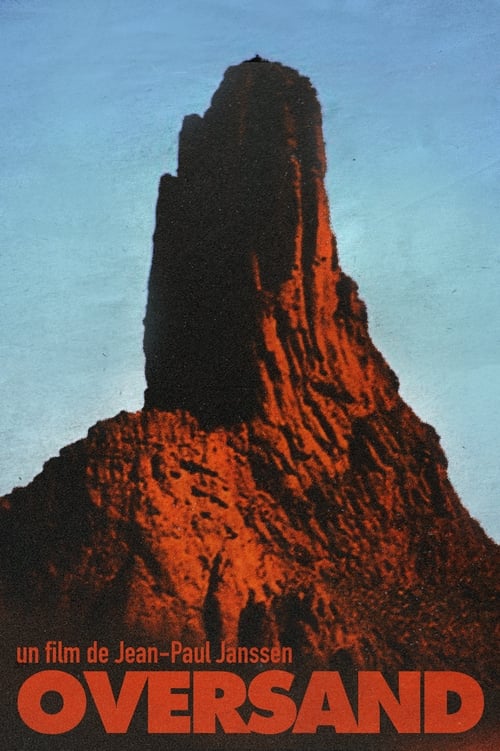
Oversand
★10.0
Film

Oversand is one of the first films about free climbing, the third film in a series of three with "Overdon" and "Over-Ice". Directed by Jean-Paul Janssen, the film was shot in 35mm in Algeria, in the Sahara Desert, in the Tamanrasset region, on the walls of the majestic peaks of the Atakor massif, central sub-region of Hoggar, mountainous heart of Hoggar, a volcanic plateau of almost circular shape, whose average altitude is 2000 meters, and which culminates at Mount Tahat (2918m), the highest point in Algeria. The Atakor is distinguished by its spectacular volcanic peaks, its needles, and its rugged landscapes, resulting from the erosion of ancient volcanic chimneys, which make it the most emblematic summits of the Hoggar, such as the Assekrem, the Ilamane, or the Tizouyag, where climbers Patrick Edlinger, Patrick Bérhault, Bernard Gorgeon, Hugues Jaillet, Jacques Perrier, Stéphane Troussier and Odette Schoënleb evolve under the watchful eye of the Tuareg caravans.

Oversand

1981

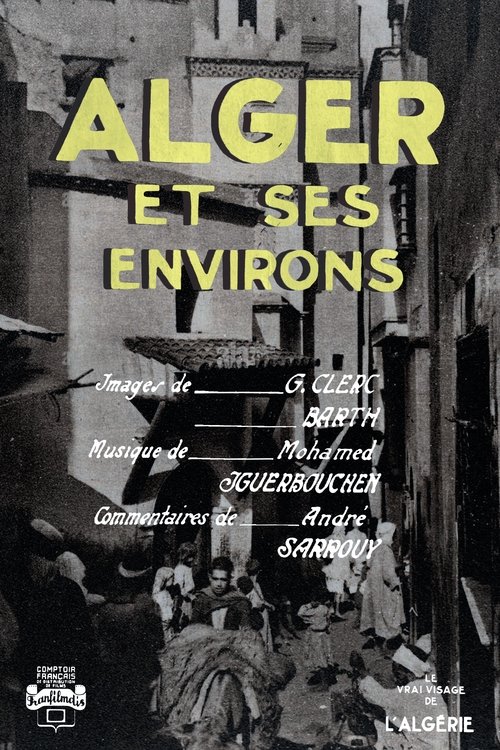
Alger Et Ses Environs
★10.0
Film

The film, shot in 1938, is part of a series entitled “The true face of Algeria”. The film highlights the proximity of Algiers to Paris and promotes air travel. The commentary supporting the images highlights the urban dynamism (“Every day, a new skyscraper replaces a wasteland”) and the comparison with Paris (“Algiers is often nicknamed the Paris of North Africa because of its elegance become proverbial). Contemporary architectural achievements are described as the sign of “grandiose modernism”: “we love the new, the bold”. But the point does not forget the buildings illustrating “the Moorish, classic and attractive style”. The description of the Casbah also attempts to understand the architectural organization but also the diversity and even the atmosphere.

Alger Et Ses Environs

1945

Fanon
★6.6
Film

Frantz Fanon, a French psychiatrist from Martinique, has just been appointed head of department at the psychiatric hospital in Blida, Algeria. His methods contrast with those of the other doctors in a context of colonization. A biopic in the heart of the Algerian war where a fight is waged in the name of Humanity.

Fanon

2025

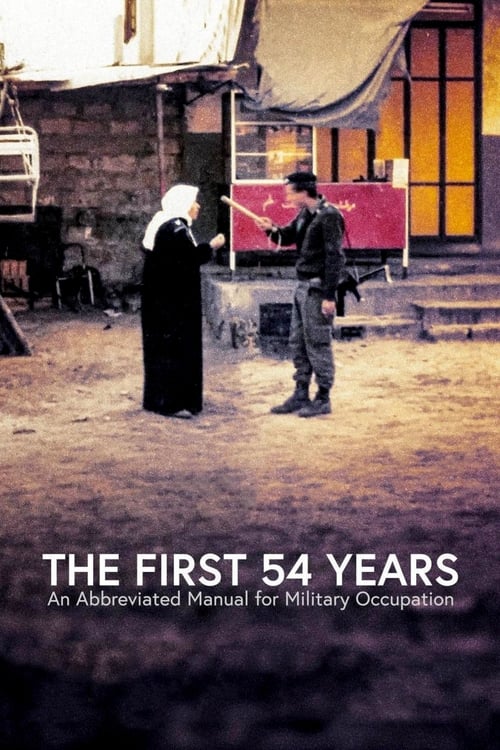
The First 54 Years: An Abbreviated Manual for Military Occupation
★6.9
Film

An exhaustive explanation of how the military occupation of an invaded territory occurs and its consequences, using as a paradigmatic example the recent history of Israel and the Palestinian territories, the West Bank and the Gaza Strip, from 1967, when the Six-Day War took place, to the present day; an account by filmmaker Avi Mograbi enriched by the testimonies of Israeli army veterans.

The First 54 Years: An Abbreviated Manual for Military Occupation

2021

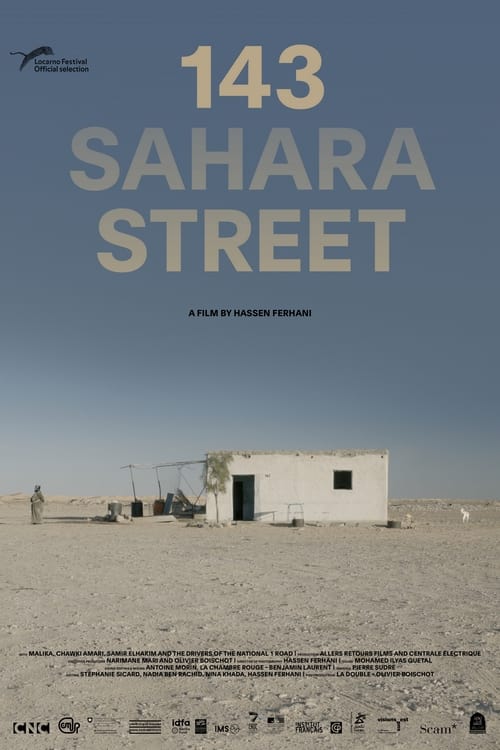
143 Sahara Street
★7.0
Film

Alone in a small white house on the edge of national road 1, the Trans-Saharan road, which connects Algiers to Tamanrasset crossing the immensity of the desert, Malika, 74, one day opened her door to the director Hassen Ferhani, who came there to scout with his friend Chawki Amari, journalist at El Watan and author of the story Nationale 1 which relates his journey on this north-south axis of more than 2000 km. The Malika of Amari's novel, which Ferhani admits to having first perceived as a "literary fantasy", suddenly takes on an unsuspected human depth in this environment naturally hostile to man. She lends herself to the film project as she welcomes her clients, with an economy of gestures and words, an impression reinforced by the mystery that surrounds her and the rare elements of her biography which suggest that she is not from the region, that she left the fertile north of Algeria to settle in the desert where she lives with a dog and a cat.

143 Sahara Street

2021

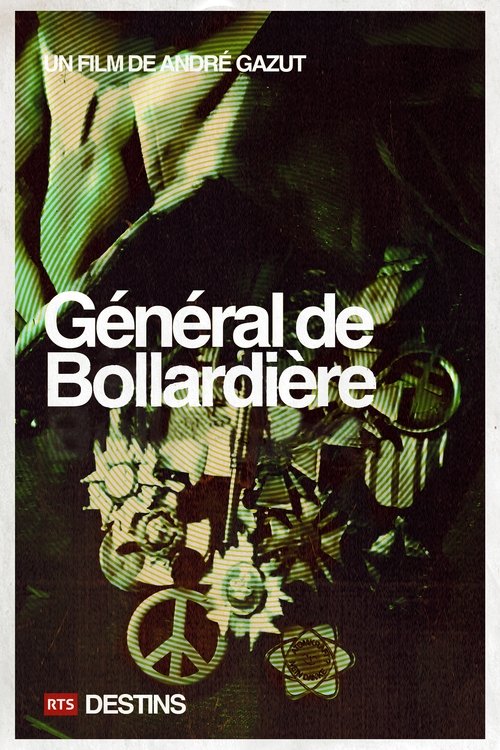
Destins: Général De Bollardière
★10.0
Film

The exceptional portrait of a pacifist general, the only senior officer to have spoken out against torture. This precious testimony still remains censored in France, since no national channel has to date decided to program this documentary. Son and brother of a soldier, General Pâris de Bollardière was destined for a career in arms. He was, for many years, one of the most brilliant representatives of this adventurer career in France, from Narvik to the Algerian War. After fighting in the French maquis, he reached Indochina, where he suddenly found himself in the aggressor's camps. His beliefs are strongly shaken. But it is in Algeria, where the French army practices torture and summary executions, that he takes the big turn. He expresses his contempt to Massu, and is relieved of his command. Until his death in 1986, Jacques de Bollardière fought for world peace, from the Larzac plateaus to the Mururoa atolls.

Destins: Général De Bollardière

1975

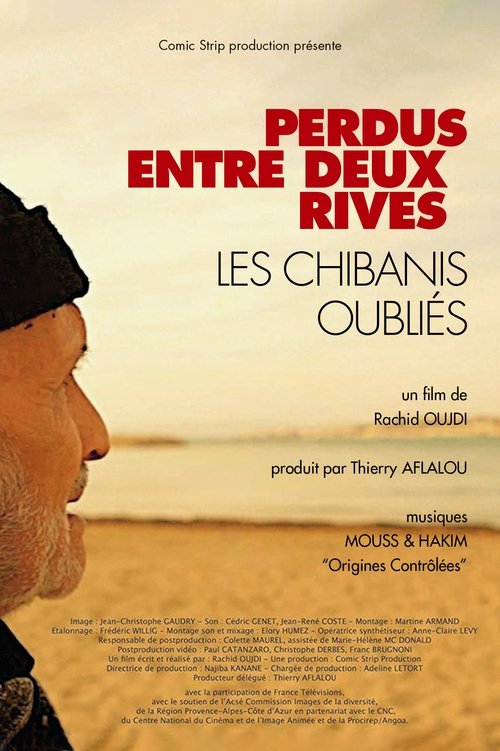
Perdus entre deux rives, les Chibanis oubliés
★10.0
Film

No description available.

Perdus entre deux rives, les Chibanis oubliés

2014

The Battle of Algiers
★7.9
Film

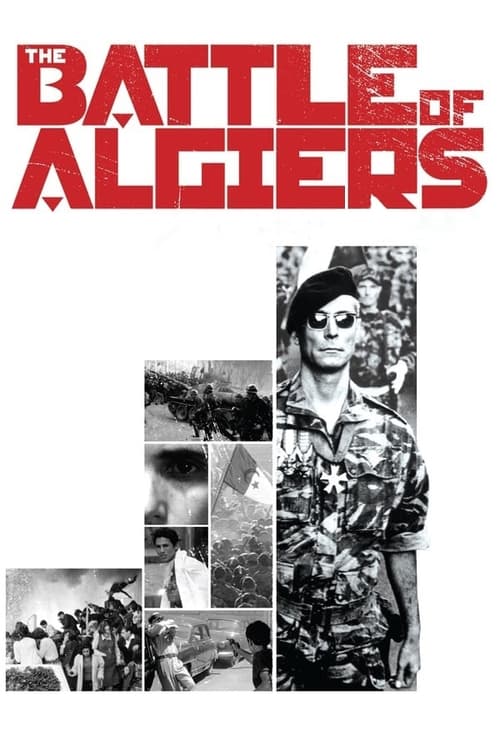
Paratrooper commander Colonel Mathieu, a former French Resistance fighter during World War II, is sent to Algeria to reinforce efforts to squelch the uprisings of the Algerian War. There he faces Ali la Pointe, a former petty criminal who, as the leader of the Algerian Front de Liberation Nationale, directs terror strategies against the colonial French government occupation. As each side resorts to ever-increasing brutality, no violent act is too unthinkable.

The Battle of Algiers

1966