K
HomeMoviesTVSearchRandom
KKINORA

This website does not retain any files on its server. It provides movie metadata and links to media hosted by third-party services. Powered by the TMDB API.

TrendingSearchMoviesTV ShowsTop RatedRandomNewest
© 2026 Kinora. Not affiliated with TMDB.Built with Next.js · Tailwind · Framer Motion
← Back to details
Now PlayingMarquis de Wavrin, from the Manor to the Jungle

Marquis de Wavrin, from the Manor to the Jungle

★ 6.52017Documentary

A documentary that invites us to discover the strange path led by the explorer-ethnographer Marquis de Wavrin who, in the 1920s and 1930s, made ethnographic films in several countries of Latin America.

🎞️More Like This

Saludos Amigos
★5.8
Film

A whimsical blend of live action and animation, "Saludos Amigos" is a colorful kaleidoscope of art, adventure and music set to a toe-tapping samba beat. From high Andes peaks and Argentina's pampas to the sights and sounds of Rio de Janeiro, your international traveling companions are none other than those famous funny friends, Donald Duck and Goofy. They keep things lively as Donald encounters a stubborn llama and "El Gaucho" Goofy tries on the cowboy way of life....South American-style.

Saludos Amigos

1942

No image
Film

The Andes Mountains travel the western side of South America. Unlike many other mountain ranges of their altitude, the Andes do support human life on their high altitude slopes. Modern life is slowly making its way to the high altitude Andes, but the natives for the most part continue with the traditional ways of their ancestors, growing limited crops such as beans and potatoes - where the crop originated - raising sheep and pigs, and living in crude huts. The llama is the most useful of their work animals. The most conspicuous aspect of the native dress is their derby hats, the origins which are unknown. Further down the slopes, agriculture and ranching is more productive and is carried out by descendants of the Spanish settlers. There is a famous lake district in the Chilean part of the Andes, where resort hotels are located.

Life in the Andes

1952

River of Gold
Film

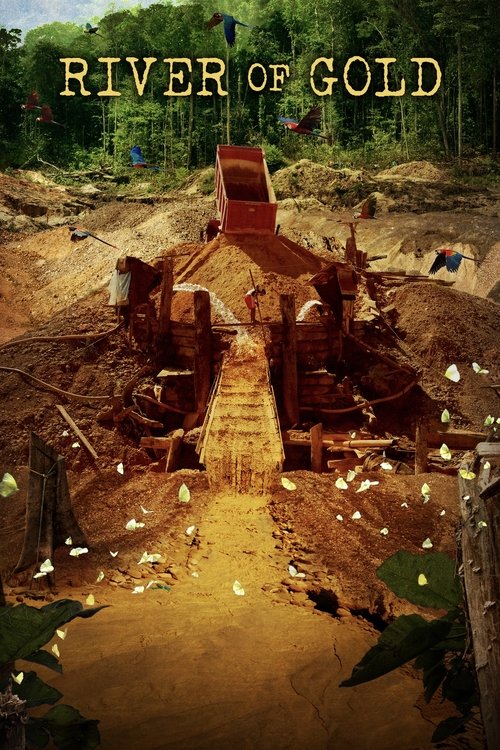
Narrated by Academy Award winners Sissy Spacek and Herbie Hancock, River of Gold is the disturbing account of a clandestine journey into Peru's Amazon rainforest to uncover the savage unraveling of pristine jungle. What will be the fate of this critical region of priceless biodiversity as these extraordinarily beautiful forests are turned into a hellish wasteland?

River of Gold

2016

Corporate Accountability
★6.0
Film

Images of Argentinian companies and factories in the first light of day, seen from the inside of a car, while the director reads out documents in voiceover that reveals the collusion of the same concerns in the military dictatorship’s terror.

Corporate Accountability

2020

A Quest to Heal: Beyond the Physical
Film

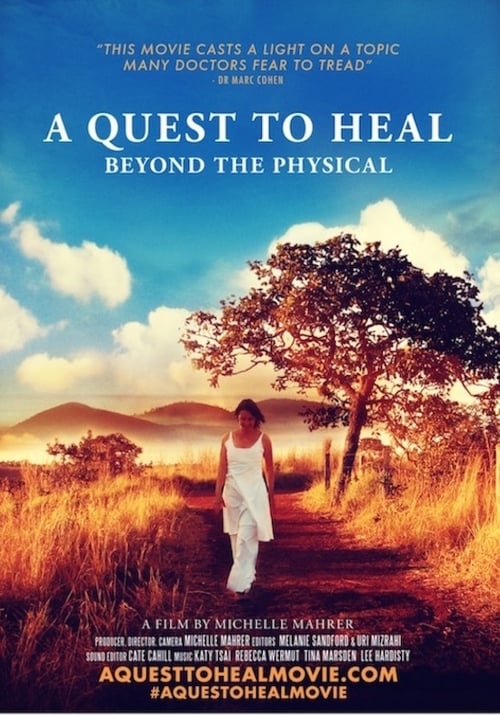
Joao Texeira de Faria, also known as John of God, is a world famous spiritual healer from Brazil who has been attributed to many miracles that science cannot explain. His work attracts both controversy and acclaim. For the past 30 years, thousands of people from all over the world have been flocking to his remote village in Brazil in search of cures for illnesses Western medicine offers little hope. Film maker Michelle Mahrer follows the journey of two of her friends on a healing odyssey to Brazil - Lya Shaked from Australia has terminal cancer, and Fred Porter from USA has HIV. Will they be lucky enough to receive a miracle?

A Quest to Heal: Beyond the Physical

2017

Nazis in the CIA
★6.5
Film

Florian Hartung and Dirk Pohlmann have reconstructed a previously unknown dimension of the collaboration between Nazis and the CIA in the Cold War. Drawing upon recently released documents, the film exposes for the first time a perfidious, worldwide net that reaches deep into the power structures of the Federal Republic of Germany. Lending their authority to the fact-finders’ mission are high-ranking statesmen, journalists and historians.

Nazis in the CIA

2013

Surviving Progress
★7.4
Film

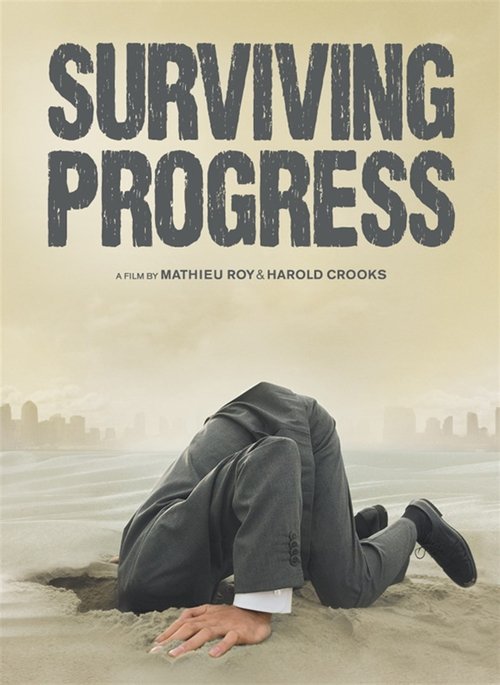
Humanity’s ascent is often measured by the speed of progress. But what if progress is actually spiraling us downwards, towards collapse? Ronald Wright, whose best-seller, “A Short History Of Progress” inspired “Surviving Progress”, shows how past civilizations were destroyed by “progress traps”—alluring technologies and belief systems that serve immediate needs, but ransom the future. As pressure on the world’s resources accelerates and financial elites bankrupt nations, can our globally-entwined civilization escape a final, catastrophic progress trap? With potent images and illuminating insights from thinkers who have probed our genes, our brains, and our social behaviour, this requiem to progress-as-usual also poses a challenge: to prove that making apes smarter isn’t an evolutionary dead-end.

Surviving Progress

2011

Piripkura
★8.0
Film

The last two surviving members of the Piripkura people, a nomadic tribe in the Mato Grosso region of Brazil, struggle to maintain their indigenous way of life amidst the region's massive deforestation. Living deep in the rainforest, Pakyî and Tamandua live off the land relying on a machete, an ax, and a torch lit in 1998.

Piripkura

2018

No image
Film

The words of the women and the rhythm of their lives in the seclusion of family compounds suggests both the satisfying and the limiting aspects of a woman's role in a rural Afghan community. Filmed in the Balkh Province, an area inhabited by Tajik and other Central Asian peoples. The town of Aq Kupruk is approximately 320 miles northwest of Kabul. The theme of the film focuses on women. The film and accompanying instructor notes examine the economic, political, religious, and educational status of women, their legal and customary rights, and the degree of change in their actual and perceived roles.

Afghan Women

1974

The Pearl Button
★6.9
Film

The ocean contains the history of all humanity. The sea holds all the voices of the earth and those that come from outer space. Water receives impetus from the stars and transmits it to living creatures. Water, the longest border in Chile, also holds the secret of two mysterious buttons which were found on its ocean floor. Chile, with its 2,670 miles of coastline and the largest archipelago in the world, presents a supernatural landscape. In it are volcanoes, mountains and glaciers. In it are the voices of the Patagonian Indigenous people, the first English sailors and also those of its political prisoners. Some say that water has memory. This film shows that it also has a voice.

The Pearl Button

2015

The Battle of Chile: Part I
★7.4
Film

The chronicle of the political tension in Chile in 1973 and of the violent counter revolution against the democratically elected government of Salvador Allende.

The Battle of Chile: Part I

1975

Come Back, Sebastiana
★5.6
Film

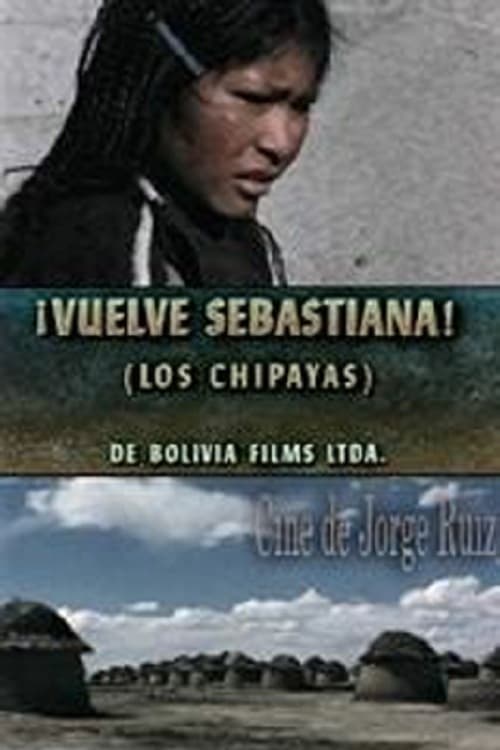
The story of a poor girl who leaves her starving family and sheep for a more prosperous village. Her grandfather finds her and tries to convince her to return to her home.

Come Back, Sebastiana

1953

The Mules
★6.5
Film

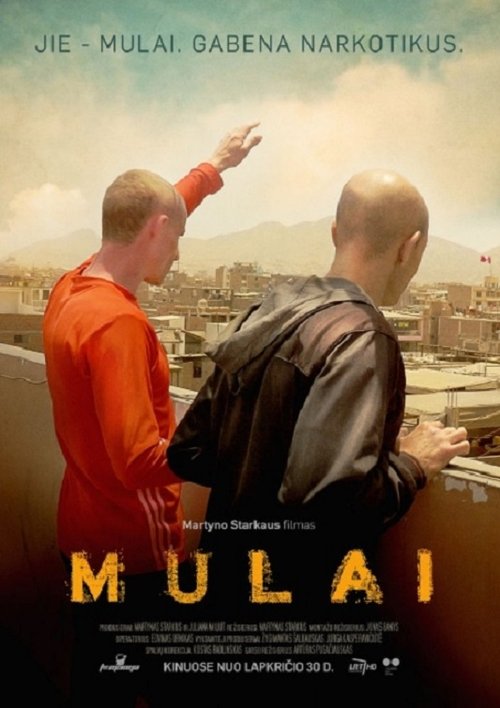
A story of three young Europeans, who fell victims to a momentary lapse of reason and currently serve their terms in prisons around South America. By following their daily lives and dissecting their deepest motivations, the film reconstructs the breaking point which turns young, optimistic, people into mere beasts of burden.

The Mules

2018

Out of Fashion
Film

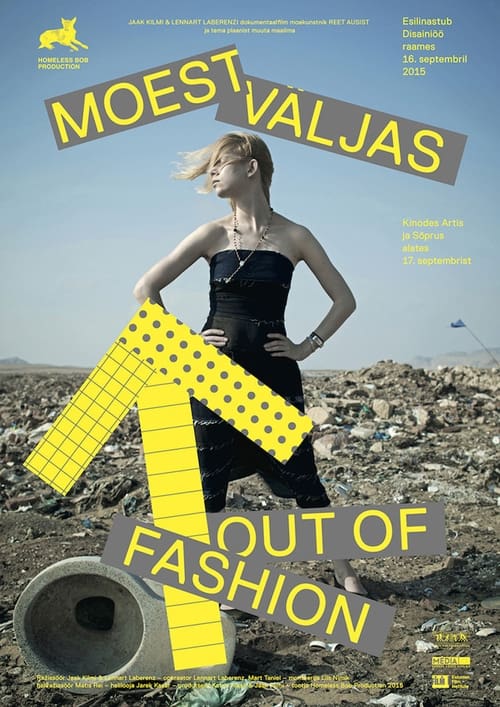
A documentary following an Estonian fashion designer Reet Aus on a global tour to explore the origin process and the environmental footprints of today's fast paced fashion industry. On the road the mission takes an unexpected turn towards trying to introduce her "upcycling" inspired product line to some of the major fashion retailers to increase awareness of the massive resource waste built into the current product lifecycle.

Out of Fashion

2015

Investigating Operation Condor
Film

In the name of the struggle against terrorism, a special operation - code named CONDOR - was conducted in the 1970s and '80s in South America. Its target were left-wing political dissidents, the organized labor and intellectuals. Condor soon became a network of military dictatorships supported by the U.S. State Department, the CIA, and Interpol.

Investigating Operation Condor

2003

Cartoneras
Film

Cartoneras is a documentary that grapples with Latin America’s urban realities, and the cardboard publishing movement that has emerged from these in the 21st century. Reflecting on the different contexts that propelled this form of community publishing, like Argentina’s 2001 economic crisis, the independent art scene, and the movements which formed around waste-pickers, the film’s narrative is developed through conversations with important actors from the cartonera world.

Cartoneras

2018