A turn of the 20th Century office block at Portage and Main. What was once Winnipeg's most prestigious commercial address has become a catch-all for the marginalized and history's leftovers. A snapshot of a fading era, now gone for good.
Googie architecture was one of the most visually exuberant and culturally formative design movements of the mid-20th century, yet it remains widely misunderstood. Defined by bold angles, sweeping rooflines, neon signage, and a sense of space-age optimism, Googie transformed everyday buildings into roadside spectacle. Coffee shops, bowling alleys, car washes, banks, and churches were designed not just for function, but to captivate motorists cruising by. Rooted in Los Angeles, the movement drew inspiration from visionary architects such as Frank Lloyd Wright and John Lautner, while firms like Armet & Davis brought futuristic flair to the commercial landscape. Though many original structures have been lost, preservationists now champion Googie as a serious architectural expression—one that captured the aspirations of postwar America and reshaped the visual identity of the modern city.
2026
A group of young architects, confined to a forest in Barcelona during the COVID crisis, explore the problems generated by the ambition of wanting to be completely self-sufficient.
2022
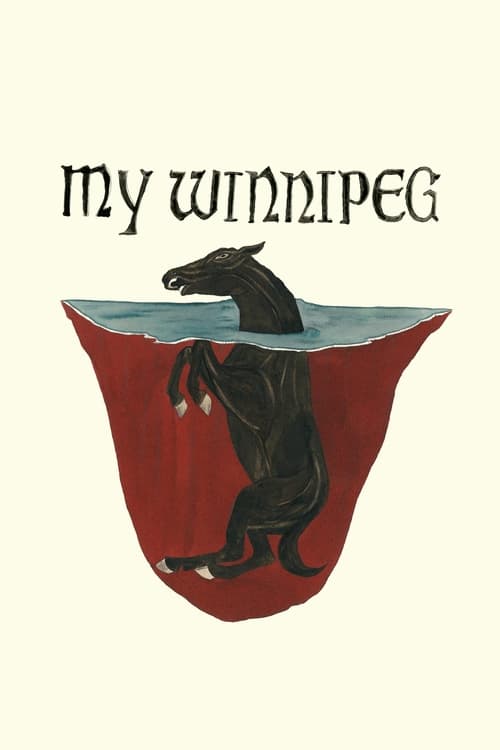
The geographical dead center of North America and the beloved birthplace of Guy Maddin, Winnipeg, is the frosty and mysterious star of Maddin’s film. Fact, fantasy and memory are woven seamlessly together in this work, conjuring a city as delightful as it is fearsome.
2008
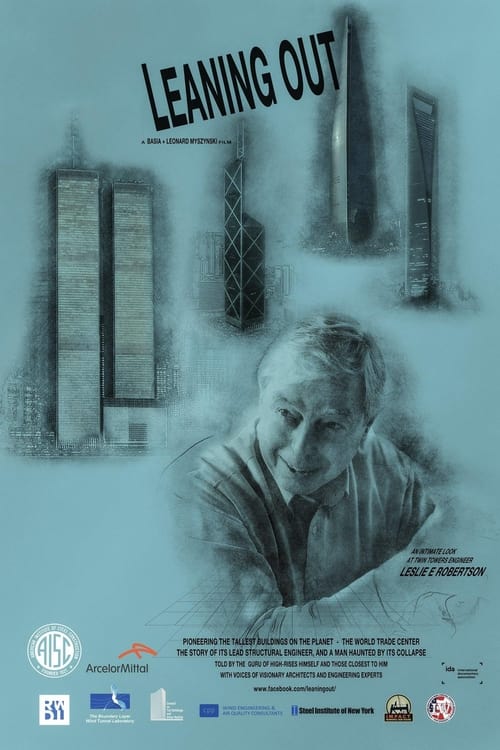
A man with a perspective like no other on the planet. The leading structural engineer of the World Trade Center oversees its construction, haunted by its fall ever since. A guru in high-rise design. Driven by his values as a pacifist and activist and the woman engineer who emboldened, expanded and ultimately saved the man she loved. About fulfillment, fragility, and a fighting spirit.
2018
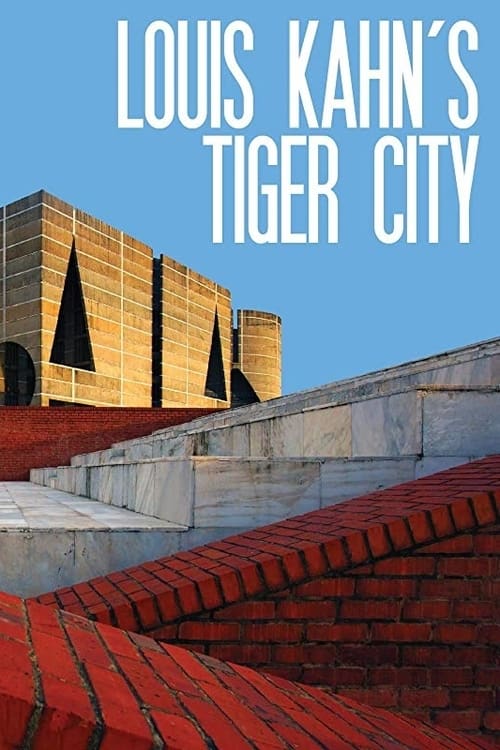
Art historian and filmmaker Sundaram Tagore travels in the footsteps of Louis Kahn to discover how the famed American architect built a daringly modern and monumental parliamentary complex in war-torn Bangladesh.
2019
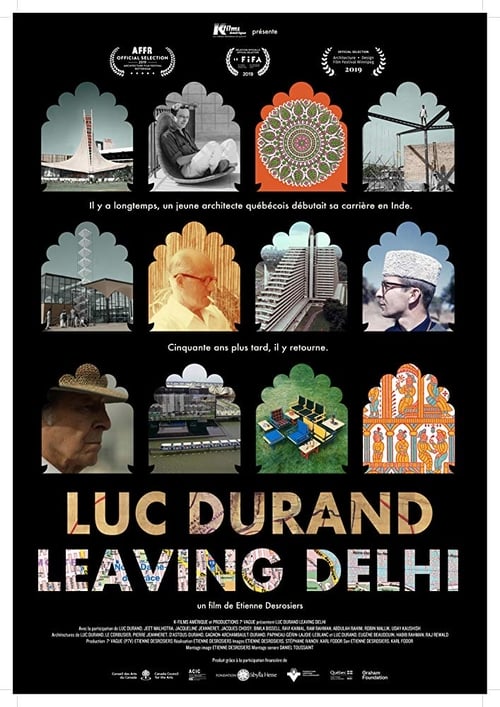
A portrait of the Canadian architect Luc Durand (1929 – 2018), who, after studying with Eugène Beaudoin in Switzerland, began his career in India. This period would be decisive for his career and would influence many of the projects he designed in Quebec, including the Quebec Pavilion at Expo 67, Place Dupuis, and the Olympic Village for the 1976 Olympic Games. Durand then decided to return to his roots in 2012, traveling from Montreal to Geneva, from New Delhi to Chandigarh. A portrait of an eminent figure in Quebec architecture.
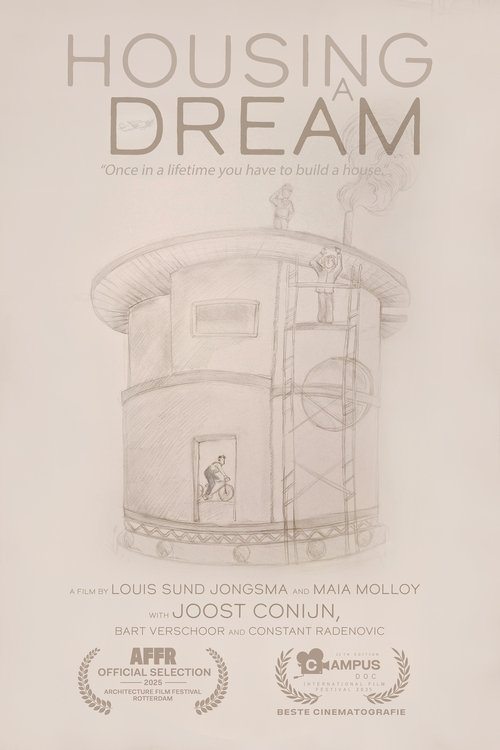
Housing a Dream follows Dutch visionary artist Joost Conijn as he builds his dream home—an unconventional, rotating house that turns with the help of a red bicycle mounted to its floor. By pedaling, Joost can orient the house to follow the sunlight, reflecting his work's delicate balance between function and poetry. Through his process, the film explores the philosophies shaped by a lifetime of craftsmanship, revealing how building a home can become a profound act of artistic creation.
2025
No description available.
2023
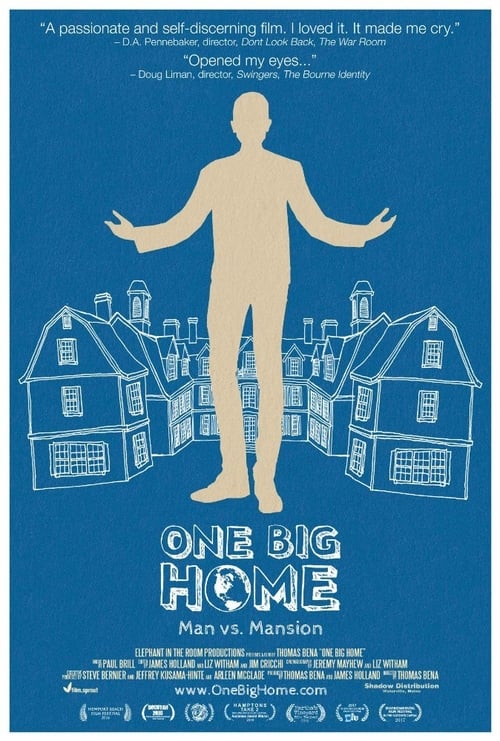
On the tiny island of Martha's Vineyard, where presidents and celebrities vacation, trophy homes threaten to destroy the islands unique character. Twelve years in the making, One Big Home follows one carpenters journey to understand the trend toward giant houses. When he feels complicit in wrecking the place he calls home, he takes off his tool belt and picks up a camera.
2017
2024
In the heart of Paris, an entire palace has disappeared. It was the very first residence of the kings of France. Long before Versailles, long before the Louvre, the Palais de la Cité stood on the most prestigious island in Paris, the historic cradle of France, facing Notre-Dame. So majestic in the Middle Ages, this palace has become a ghost of history. Over the centuries, this architectural masterpiece has almost completely disappeared. A trio of experts will resurrect it in 3D. Using science and unprecedented excavations, they will track down the pieces of the puzzle to reconstruct it at its peak in the 14th century, and bring back to life those who inhabited it. From the Romans to the Vikings, from Saint Louis to the cursed kings, all have left clues of this 'Versailles of the Middle Ages'.
In 1967, de Andrade was invited by the Italian company Olivetti to produce a documentary on the new Brazilian capital city of Brasília. Constructed during the latter half of the 1950s and founded in 1960, the city was part of an effort to populate Brazil’s vast interior region and was to be the embodiment of democratic urban planning, free from the class divisions and inequalities that characterize so many metropolises. Unsurprisingly, Brasília, Contradições de uma Cidade Nova (Brasília, Contradictions of a New City, 1968) revealed Brasília to be utopic only for the wealthy, replicating the same social problems present in every Brazilian city. (Senses of Cinema)
1968
A docu-art film about Kyiv and the contemporary problems of the capital. The film raises the issue of the dilapidated state of Kyiv's old buildings and the search for effective mechanisms to preserve the city's architectural heritage.
2020
A Berlin street corner is slowly changing: an aging supermarket turns into a construction site and finally a new building. People restock shelves, demolish walls, take breaks and count money. Those who work here participate in the making and unmaking of the place. How does it shape the conditions of their labor? Between supermarket aisles, construction scaffolding and exposed concrete, different versions begin to overlap. Repetitions appear like echoes between worlds, both playful and eerie.
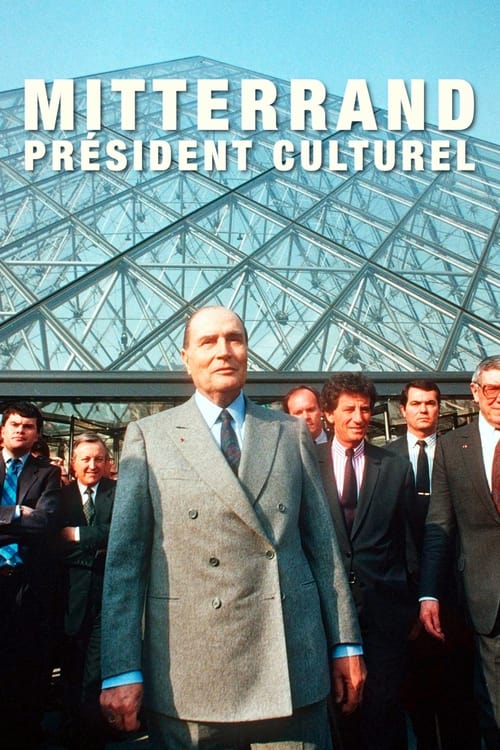
On the occasion of the fourty years anniversary of François Mitterand's election, a look back to the relationship between the President and artists, from admiration to manipulation.
2021
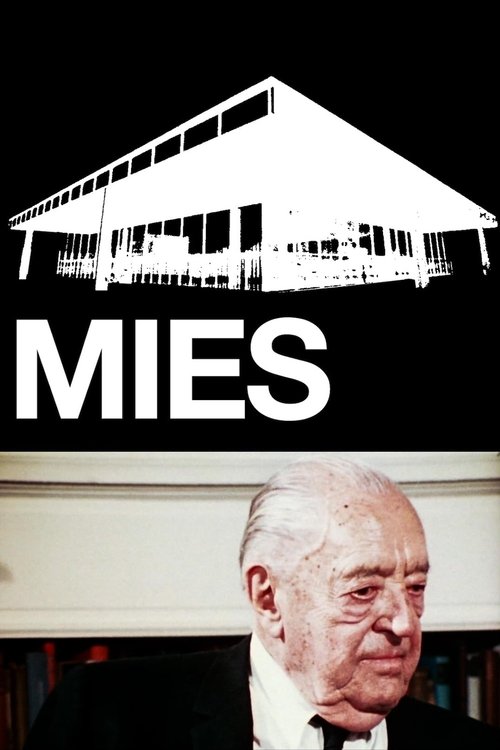
No understanding of the modern movement in architecture is possible without knowledge of its master builder, Mies van der Rohe. Together with documentation of his life, this film shows all his major buildings, as well as rare film footage of Mies explaining his philosophy. Phyllis Lambert relates her choice of Mies as the architect for the Seagram building. Mies's achievements and continuing influence are debated by architects Robert A.M. Stern, Robert Venturi, and Philip Johnson, by former students and by architectural historians. Mies is seen in rare documentary footage.
1986