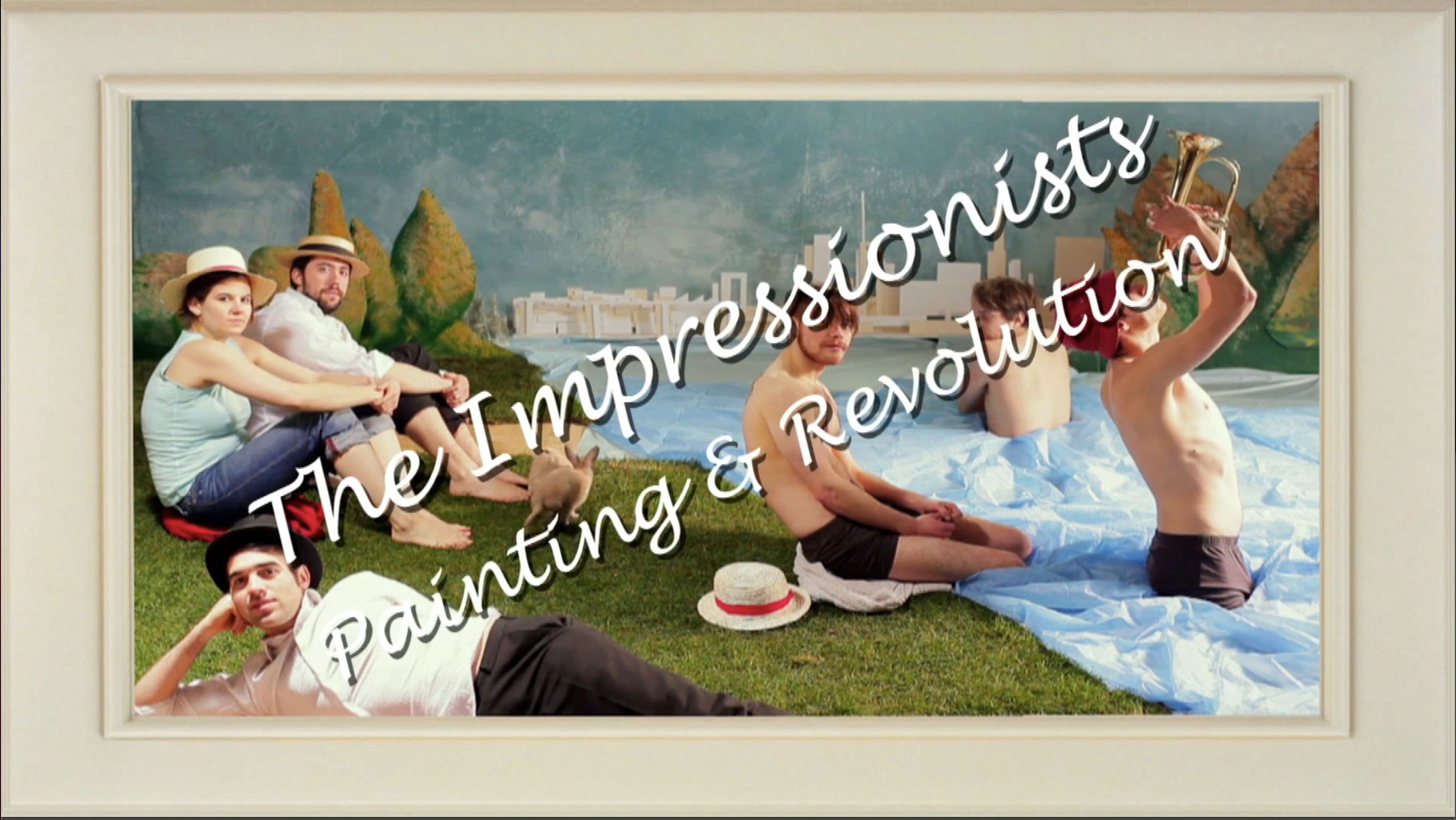
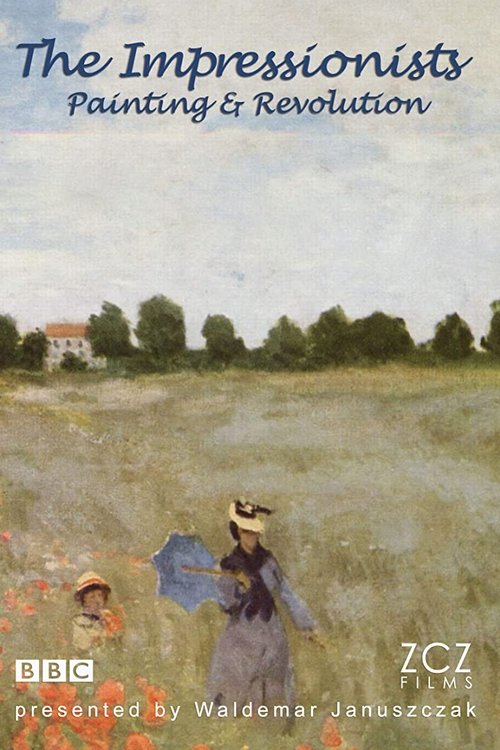
The Impressionists: Painting and Revolution★ 10.020111 season~60mEndedDocumentaryArt writer Waldemar Januszczak explores the revolutionary achievements of the Impressionists.Watch NowWatch trailerCreated bySusan DoyonNetworkBBC TwoLanguageEnglishEpisodesSeason 1E1Gang of FourArt writer Waldemar Januszczak explores the revolutionary achievements of the Impressionists. In the first episode, Waldemar delves into the back stories of four of the most influential Impressionists - Pissarro, Monet, Renoir and Bazille - who together laid the foundations of the artistic movement. He finds out what social and cultural influences drove them to their style of painting, how they were united and how ultimately they challenged and changed art forever. Waldemar journeys from the shores of the West Indies, to the progressive city of Paris to the suburbs of South London, where these four artists drew inspiration from the cities and towns in which they lived. Whether it be the infamous spot on the river Seine - La Grenouillere - where Monet and Renoir beautifully captured animated people, iridescent light and undulating water or the minimalist, non-sensationalised illustrations of Pissarro's coarse countryside paintings, Waldemar discovers how the Impressionists broke conventions by depicting every day encounters within the unpredictable and ever changing sights around them.2011-11-08· 60mE2The Great OutdoorsWaldemar Januszczak continues his investigation of the Impressionists by taking us outdoors to their most famous locations. Although Impressionist pictures often look sunny and relaxed, achieving this peaceful air was hard work. Trudging through fog, wind and rain, across treacherous coastal rocks and knee-deep snow, Waldemar shows how the famous spontaneity of the Impressionists is thoroughly misleading. This episode visits the French riverside locations that Monet loved to paint, and where Renoir captured the bonhomie of modern life. Waldemar also introduces a number of technical and practical developments of the age which completely revolutionised Impressionist painting - the invention of portable easels; the use of hog's hair in paint brushes; as well as the introduction of the railway through France. And a scientific demonstration in a Swedish snowdrift explains just how right the Impressionists were to paint brightly coloured shadows in their winter scenes, despite being accused of 'hallucinating' at the time. Finally, Januszczak explains Cezanne's part in the Impressionist story from his dark and challenging early work to his first rural landscapes in France, and then his departure from Paris and separation from the Impressionist gang.2011-11-15· 60mE3Painting the PeopleWaldemar Januszczak continues his investigation of the Impressionists, focusing this time on the people they painted and in particular the subjects of Degas, Caillebotte and the often forgotten Impressionist women artists. The Impressionists are famous for painting landscape but they were just as determined to paint people. Looking closely at one of Impressionism's finest painters, Edgar Degas, Waldemar reveals how he consistently challenged traditions and strove to record real life as it appeared in the city, from sculpting the contorted movements of horses in motion at the Longchamp race course in Paris to encapsulating extravagant 3D viewpoints of the ballet dancers at the Paris Opera. Waldemar also uncovers the intoxicating haziness the pastel produced in Degas' work when visiting his supplier Pastels de Roche. He also reveals the unusual viewpoints and dramatic perspectives of Caillebotte's paintings from the Place de L'Europe and the rebellious and revolutionary art of Morisot, Bracquemond and Cassatt, three impressive female artists who were eagerly embraced by the progressive movement of Impressionism.2011-11-22· 60mE4Final FlourishThis episode takes a closer look at the late years of Impressionism, using the last show these artists did together as a starting point. Waldemar looks in considerable depth at the work of Georges Seurat, taking into consideration his academic training at the Beaux-Arts School in Paris and the artists that influenced him, such as Piero della Francesca and Puvis de Chavannes. There is also an insight into the complex but fascinating world of optics and art, and the ways in which the Impressionists were using the new discoveries in light and eyesight to influence their work. A fascinating 'after-image' experiment brings to life the ways in which our own eyes see colour, both in its presence and its absence. Van Gogh's time in Paris, a period very little is known about, is also covered, charting the incredible journey the artist made from his brown and dull canvases to the splendid colour and light that pervaded his work on the cusp of his departure for the South of France. The film finishes with a revisiting of Monet and his later waterlily paintings in the Orangerie in Paris. Waldemar investigates how a bad case of cataracts was responsible for a seismic shift in his colour palette and his brushstrokes. Spending time with an ophthalmologist, he finds out how old age and a fairly common ailment of the eyes caused Impressionism to shift and become radical again at the turn of the century and into the 20th century.2011-11-29· 60mTop CastWaldemar JanuszczakHimself📺More Like This‹›★10.0TVNo description available.Faire oeuvre utile2018TVAs Johnny prepares to create a piece of public art for his home town of St Helens, an unexpected diagnosis sets him off on a complex emotional journey of self-discovery where art and life sometimes merge.Johnny Vegas: Art, ADHD & Me2025★7.7TVIn this three-part documentary series Waldemar Januszczak discovers paintings, sculptures and architecture of the Baroque period. Starting from the square of Saint Peter's Basilica in Italy to St Paul's Cathedral in England.Baroque! From St Peter's to St Paul's2009TVNo description available.流动的盛宴2017TVDr Adam Rutherford investigates the close relationship between discoveries in anatomy and the works of art that illustrate them.The Beauty of Anatomy2014TVHis art changed the way we see the world - now change the way you see the artist. An unflinching look at Picasso's legacy, and the horror and brilliance of what he left behind. Family, friends and experts reassess the tumultuous artistic and personal life of Pablo Picasso, one of the greatest and most provocative artists of all time.Picasso: The Beauty and the Beast2023★7.3TVArt historian Waldemar Januszczak uncovers the secret meanings hidden within some of the greatest paintings by Van Gogh, Gauguin, Cezanne and Seurat .The Art Mysteries with Waldemar Januszczak2020TVEkiem Barbier and Guilhem Causse offer a unique experience to Victor Assié, a young actor questioning the meaning of his profession: to explore an online simulation of daily life as an avatar and meet its users, while playing his own role. Through his complicated but hilarious peregrinations, he discovers a new yet familiar world.In Real Life2025★6.0TVAndrew Graham-Dixon embarks on his most ambitious journey yet, an exploration of the rich, exciting and diverse art history of the United States of AmericaArt of America2011★8.3TVAndrew Graham-Dixon undertakes an epic journey to uncover the art of China.Art of China2014TVThrough the beauty of artistic forms, Ramon Gener goes inside the inner workings of human nature. All artists use art to explain their emotions.This is art2017TVNo description available.Fotografi2012★6.8TVHow did an Indian Buddhist shrine influence a Japanese pagoda? How are Italian pigs and cowry shells related to porcelain? Why did the ferocious warriors of Mongolia wear silk underwear? And how did wood block printing bring about a revolution in Japan and in European culture? These intriguing questions are investigated in Artifacts, a series that explores the origins and hidden connections among the art and artifacts of the great cultures and belief systems across Asia - on a journey through time and across continents from India to Thailand, China and Japan - to understand the impact of calligraphy, porcelain, architecture, metallurgy, wood block printing and silk on Asian history and on the history of the world in general.Artifacts2000TVUnframed immerses viewers in Lebanon's creative pulse, following independent artists as they navigate their craft, inspirations, and challenges—offering an intimate and unfiltered look at the role of art in a country undergoing constant change.Unframed—TVNo description available.L'Amour à l'Oeuvre2018TVNo description available.The Antagonists: Rivalry in Art2016← Back to TV shows