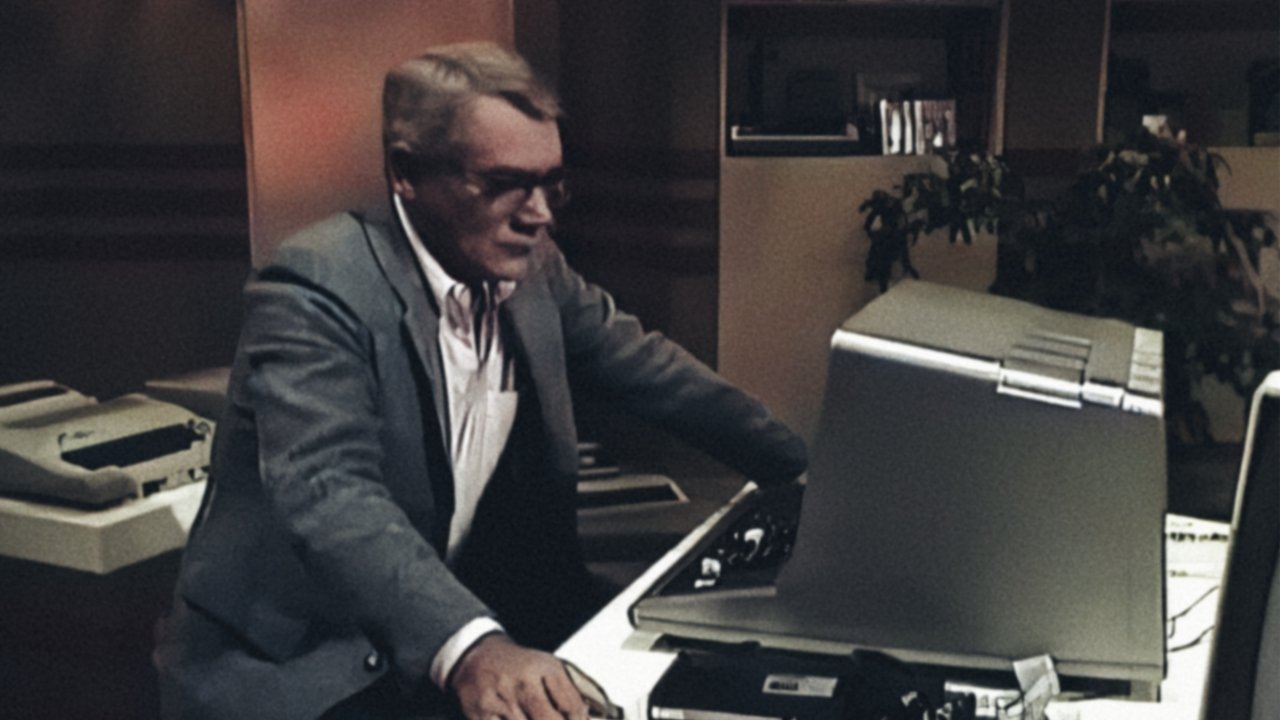
The Academy★ 0.019831 seasonEndedDocumentaryA companion programme to TVOntario's Bits and Bytes, The Academy explores the principles and applications of computer technology in greater detail.Watch NowWatch trailerCreated byMike McManus, David StansfieldNetworkTVOntarioLanguageEnglishEpisodesSeason 1EP 1E1Getting StartedThis episode looks more closely at the key hardware elements of a computer, and introduces many of the popular home computers of 1983. It also includes a panel discussion involving a primary and a secondary school teachers, an at-home/small business user, an office automation consultant and a lawyer on what computers mean to them, and how they've have been changing their lives; and a segment where viewers' questions are answered.1983-02-16· 30mEP 2E2Ready Made ProgramsIn this episode, we touch on the issues of computer architecture and software compatibility, and how software is loaded into and saved from the computer. It also includes a panel discussion involving an instructional computing specialist, a (particularly interesting) editor-teacher-consultant, a lawyer, and an educator-consultant, and covering ready-made software, what makes a program good, how one might settle on a microcomputer, the balance between passive use of the computer as an appliance versus active/creative use through programming, the balance of 'serious' and entertaining uses of the computer (and the intersection of entertainment and education), and the role of local user groups.1983-02-23· 30mEP 3E3How Programs WorkJim Butterfield demonstrates computer programs, how operators interact with them, and the methods computer programs use to commuicate. In addition, a conversation with a computer programmer about their techniques, and a panel discussion on why the need to write computer programs.1983-03-02· 29mEP 4E4File and Data ManagementJim Butterfield demonstrates how file systems work on computers, and how to store data on internal devices and external devices such as floppy disks. A panel demonstrates how they store data related to their jobs and hobbies. Plus, we hear from viewers with questions on computers and technology.1983-03-09· 29mEP 5E5Communication Between ComputersJim Butterfield demonstrates sharing resources between computers to complete complex tasks and spread information across areas. A panel demonstrates how their own computers and communication tools. Plus, viewer correspondence.1983-03-16· 29mEP 6E6Computer LanguagesJim Butterfield discusses the instructions that make a computer tick - computer languages. He demonstrates many of the popular languages in use today, then discusses with educators the languages they use both at home and in the school. Plus, viewer correspondence on various computing topics.1983-03-23· 29mEP 7E7Computer-Assisted InstructionA focus on using computers to aid in education. School teacher Joe Vanya discusses his use of computer assisted instruction in Canadian schoolrooms, creating games and tools to help students learn. A panel of teachers discusses their use of CAI, plus viewer correspondents with Jim Butterfield.1983-03-30· 29mEP 8E8Simulations and GamesComputers are not just for education and business, they can be for fun! Jim Butterfield discusses the different kinds of games on the market. School teacher Larry Noonan goes in depth on educational video game Rocky's Boots, while game designers demonstrate their latest creations. Plus, viewers write in on their computing questions.1983-04-06· 29mEP 9E9Computer GraphicsJim Butterfield looks at a number of micro-computers and how they implement computer graphics. The LOGO programming system is demonstrated to showcase users creating their own computer graphics. A round table discussion on computer graphics plus viewer correspondence round out the programme.1983-04-13· 29mEP 10E10Computer MusicJim Butterfield demonstrates music creation and voice synthization on microcomputers, including tools that assist in learning how to read and speak. A panel demonstrates musical interfaces on their own computers, including microphones and musical keyboards. Plus, viewer correspondence and questions.1983-04-20· 29mEP 11E11Computers at WorkWith micro-computers making computers more affordable, Jim Butterfield discusses various uses of this technology in the office. Spreadsheets, charting, and information sharing is demonstrated. Business owners and educators discuss the uses of computing in their businesses. Plus, viewer correspondence.1983-04-27· 29mEP 12E12What Next?What is the future of computers? What side effects will there be, on privacy, information security, or socialization? A panel of experts have an indepth discussion. Plus, Jim Butterfield gives his predictions on the future of computing.1983-05-04· 30mTop CastJJim LivesleyHostJJim ButterfieldSpecial Guest📺More Like This‹›★7.6TVAustralian host Steve Irwin and his wife Terri run a wildlife refuge. Their shared passion is educating the world about wildlife, including the much feared crocodile and numerous venomous snakes. Steve's specialty is the capture and relocation of crocodiles. No animal appears too threatening to Steve, his true respect for animals is the foundation for everything he does.The Crocodile Hunter1997★3.3TVAladdin's Genie tells the stories of great historical figures who were prone to defy common thinking to make a difference in their times.Great Minds Think for Themselves1997★6.5TVAntiques Roadshow is a British television show in which antiques appraisers travel to various regions of the United Kingdom to appraise antiques brought in by local people. It has been running since 1979. There are also international versions of the programme.Antiques Roadshow1979TVIn the tradition of WWII-themed graphic novels such as Maus, six remarkable motion comics tell the dramatic stories of the brave people who raised their voices to advocate for Jewish refugees victimized by the NazisThey Spoke Out: American Voices Against the Holocaust—★7.0TVPresenter Rob Bell takes us on a voyage around Britain and Ireland to reveal the hidden secrets that make offshore lighthouses such extraordinary feats of engineering.Building the Impossible2020★7.8TVAttention please! Are you ready for an adventurous tour through the human body? With a lot of humour, our physical appearance is being introduced from head to toe along cells and organs in an educational way. The heart, blood, nerves and kidneys, each single one is a miracle which renders life possible.Once Upon a Time... Life1987★7.0TVA series of three programmes investigating the so-called microelectronics revolution.The Silicon Factor1980★7.3TVTime Team is a British television series which has been aired on British Channel 4 from 1994. Created by television producer Tim Taylor and presented by actor Tony Robinson, each episode featured a team of specialists carrying out an archaeological dig over a period of three days, with Robinson explaining the process in layman's terms. This team of specialists changed throughout the series' run, although has consistently included professional archaeologists such as Mick Aston, Carenza Lewis, Francis Pryor and Phil Harding. The sites excavated over the show's run have ranged in date from the Palaeolithic right through to the Second World War.Time Team1994★7.4TVIt's "Mr. Wizard" for a different decade. Bill Nye is the Science Guy, a host who's hooked on experimenting and explaining. Picking one topic per show (like the human heart or electricity), Nye gets creative with teaching kids and adults alike the nuances of science.Bill Nye the Science Guy1993★7.0TVTracy Borman reveals the intimate details of the monarchs, to find out what really went on in their private lives.Private Lives of the Monarchs2017TVSander Schimmelpenninck investigates the far-reaching influence of social media on our society and politics. To this end, he talks to journalists, moderators, philosophers, lawyers and troll hunters. How does social media use undermine our democracy and why is no one doing anything?Sander versus the socials2023TVNo description available.Okna vesmíru dokořán1981TVA risky expedition along thoroughfares that harbor mortal danger for those who use them or live on them. They run through deserts, ice, and snow, deep in the jungle, along water, and over mountains: the world's most dangerous roads, truly "hot roads." Many have died along these roads.Hot Roads - The World's Most Dangerous Roads2011★6.4TVA series of very short films inspired by the amazing and often bizarre sexual practices of insects and other creatures.Green Porno2008★6.8TVZoboomafoo is an American children's television series that aired from January 25, 1999, to April 28, 2001, and is still shown today in syndication depending on the area, and it is regularly shown on PBS Kids Sprout. A total of 65 episodes were aired. A creation of the Kratt Brothers, it features a talking Coquerel's Sifaka, a type of lemur, named Zoboomafoo, or Zoboo for short, and a collection of repeat animal guests. Every episode begins with the Kratt brothers in "Animal Junction", a peculiar place in which the rules of nature change and wild animals come to visit and play. After January 16, 2004, the show was pulled from its weekday airing on most PBS stations, though some continue to air the show.Zoboomafoo1999★7.8TVNewton's Apple is an American educational television program produced and developed by KTCA, and distributed to PBS stations in the United States that ran from 1983 to 1999. The show's title is based on the rumor of Isaac Newton sitting under a tree and an apple falling near him—or, more popularly, on his head—prompting him to ponder what makes things fall, leading to the development of his theory of gravitation. The show was produced by Twin Cities Public Television. For most of the run, the show's theme song was Ruckzuck by Kraftwerk, later remixed by Absolute Music. Later episodes of the show featured an original song. An occasional short feature appeared called "Science of the Rich and Famous" in which celebrities appeared to explain a science principle.Newton's Apple1983← Back to TV shows