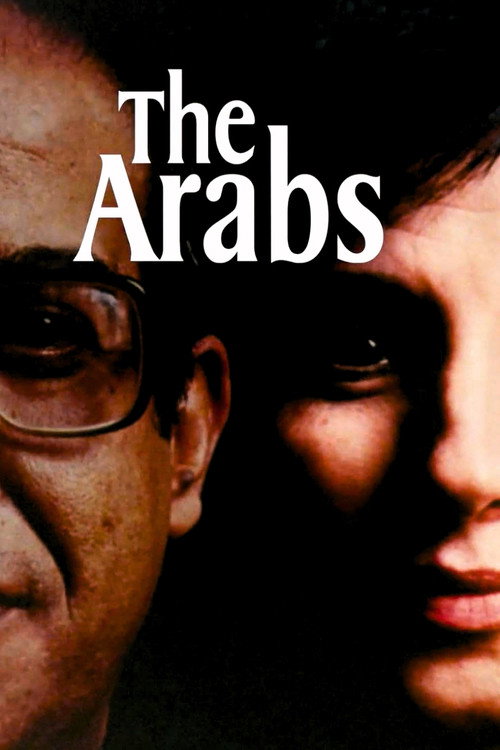
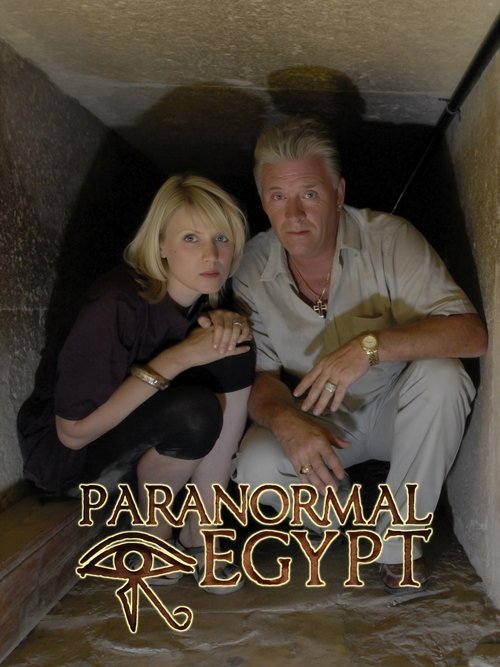
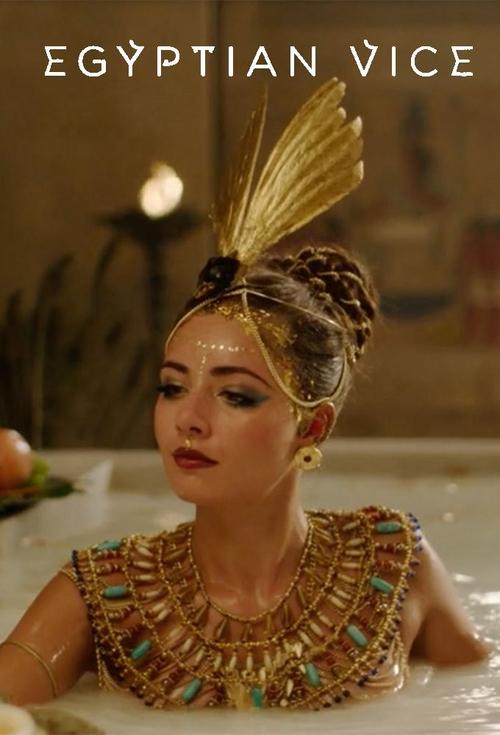
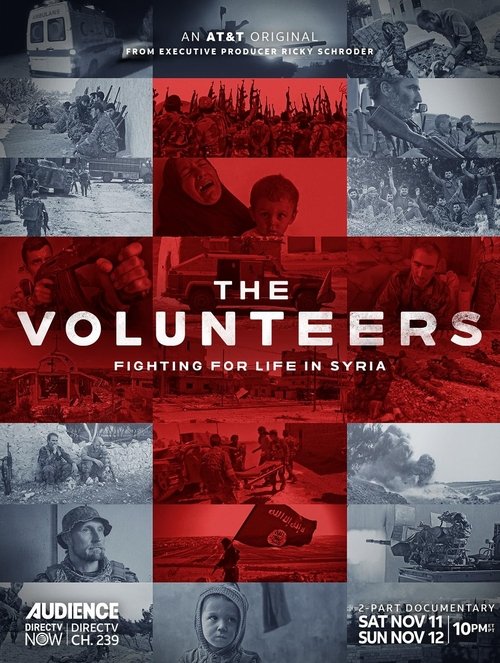
The Arabs: A Living History★ 0.019791 season~50mEndedDocumentaryA series of ten one-hour documentaries which explores Arab history, culture and society from within through the lives and opinions of Arabs today.Watch NowNetworkPBS, Channel 4LanguageArabic, EnglishEpisodesSeason 1EP 1E1The Making of the ArabsThe first film in this important series introduces the viewer to the rich variety of life, opinion and history that exists in the region we call the Arab world the lands which stretch from the mountains of Morocco to the deserts of the Arabian Peninsula, from the valley of the Nile to the Eastern shores of the Mediterranean Sea. Why do the 180 million people who inhabit these lands call themselves Arabs? As he journeys through this crucial region our writer and guide Basim Musallam talks to man and women from the four corners of the Arab world and searches for the source of the Arab identity which he and they share. The film starts in his troubled home city of Beirut; moves to Cairo; to the bustle of Kuwait; to the ancient and beautiful land of Morocco.1979-01-01EP 2E2Between Two WorldsWhat was Arab society like during the thousand year period following the decline of the Arab Empire? What memories, what feelings, does it provoke in the minds of today’s Arabs, caught as they are in the turbulence of 20th Century change? Abdelmalek Tazi is a member of an influential family of Fez, ancient seat of the rulers of Morocco. As Abelmalek plays with his children, looks for business contacts in the Arabian Gulf states, prays at his father’s tomb, or revisits his childhood haunts in the medieval quarter of Fez, our writer, Abdallah Hammoudi, questions how deeply the manners, beliefs, attitudes and values of the old Arab world penetrate the lives of modern Arabs. As he says: “Is it really possible to be an Arab in that traditional world and in the world of tomorrow?”EP 3E3The City Victorious?This film looks at changing fortunes in the traditional relationship between Arab city and countryside. We focus on one small corner of Cairo and one small village in the Nile Delta, sixty miles to the north. In the village we meet a young peasant, Mitwali Balah, and come to understand his arduous life which he wishes to exchange for the seemingly magical prospects of life in Cairo. The film follows the young man to Cairo where he seeks the advice and company of other migrant workers from his home village. Disillusion sets in and he returns to the Delta. The lives of these young peasants are looked at not only in the context of the overburdened, overpopulated Cairo of today but in the context of a 19th Century dream, of creating a city to rival Paris. Ever-present are the great monuments of medieval Cairo a potent reminder of the power that flowed from her when she was the greatest of all Arab cities.EP 4E4The Power of the WordThe ancient Arabic language, transplanted, with the spread of Islam, from the Arabian Peninsula to Europe and the borders of China, remains the pivot of Arab culture today. Arabic, the language of the Quran, is the sacred language for all Muslims and has played a major role in shaping and maintaining Arab society. Poetry remains the forum for political debate, and major poets attract thousands to hear them recite their latest works. In the words of our writer, Khalida Said: “Poetry is the best witness to our crisis it’s our creative response to these bad times.” Paradoxically, war-torn Lebanon’s a meeting place of contemporary intellectual thought in the Arab world; still the publishing centre, still a refuge for poets, painters and novelists form troubled Arab lands; “the capital of the Arabs’ deepest wounds”.EP 5E5New Knowledge for Old900 years ago Arab Muslims were the world’s greatest seekers after knowledge and wisdom of the Greeks. Today that Arab scholarship is a natural part of the inheritance of all scientists and thinkers, not least of the modern generation of Arab research-workers, many of whom work in the new Institutes in the Gulf States which we visit in the course of this film. Abdulhamid Sabra, himself an historian of science, stresses the need for all modern societies to recognise and embrace their own scientific and cultural heritage. Only forty years ago Kuwait was dominantly a small community of traders, fishermen and pearl divers on the Eastern fringe of the Arab world. But there was already the promise of oil. The oil-generated wealth of the past twenty years has transformed Kuwait into a thriving, modern city state with highest per capita income in the world.EP 6E6Ways of FaithMuslim author and poet Ali al Mek looks at the ways and meaning of the Islamic Faith as they affect one particular group of Muslims within his own experience, the people of the village of Umduban in central Sudan. No single community or village can ever adequately represent the entire Islamic Faith, but this encounter with the religious life of Umduban leads to an understanding of that living Islam which informs the very existence of Muslims the world over. Umduban is also a religious centre. The film follows small groups of individuals who have come to the village twin boys sent to the Quranic school, a young woman seeking a cure, a Khartoum tradesman who belongs to a Sufi order and finds fulfilment in ceremonies through which man draws closer to God. But there is another expression of Islam present in Umduban too- that which lays its sole emphasis on obedience to the laws derived from the Quran and the traditions of the Prophet’s teachings.EP 7E7The Shadow of the WestThis film assesses the changes which came about as the Arab countries were drawn into the new political and economic order of modern times. Those changes not only affected the Arab countries but also the way in which they came to be viewed by people in Europe and America. Its main focus is on the plight of the Palestinians, which can be seen as the most enduring residue of the modern encounter between the Arabs and the West. Edward Said is a Palestinian living and working in New York. He is outspokenly and actively critical of the treatment of his fellow-Palestinians and is no longer welcome in the city of his birth, Jerusalem. In this film he develops the themes contained in his trilogy of books ‘Orientalism’, ‘The Question of Palestine’ and ‘Covering Islam’.EP 8E8Building a NationThe last three films in “The Arabs” focus on the processes of post-Colonial change in the Arab world. Mahfoud Bannoune analyses the problems faced by Arabs as they constructed their new nations over the past quarter of a century and the solutions open to them. He does so by reference to his own country, Algeria, which achieved its independence in 1962, with appalling loss of life. If old ways were obsolete and a new age had to be created in the aftermath of an eight-year war, what industrial and economic options were open to the Algerians? Mahfoud Bannoune looks at the process of industrialisation and its effects upon a traditional farm and peasant-based economy; its effect upon the quality of day to day life as services and facilities have tried to keep pace with the rush to the cities.EP 9E9Family TiesWriter and journalist Nadia Hijab weaves this film around a large extended family of Jordanians living in Amman. The mother, Umm Ghassem, is clearly the powerful heart of this family strong and humorous and frank in her description of her life. In spite of its traditional restraints, the extended Arab family is seen to work as secure and loving and caring as it has always been. But we also meet other girls and women who feel that the traditional role of wife and mother is insufficient the Tunisian girl who longs to leave home and find her own flat, the modern Jordanian woman who flies a Tri-star and plays squash to keep fit. As she talks to Arab women and their families and to women active in medicine, politics, literature and the law, Nadia Hijab asks “How can we Arabs preserve the strengths of our family life and still give women a chance to lead their own lives?”EP 10E10Arabs NowWhat do the Arabs believe to be the most potent forces in their society at the present time and how do they assess their condition today? How possible is criticism of that condition and who will be the most effective critics? The intellectuals? The politicians? Arab youth? Fifty percent of all Arabs are under the age of twenty and 20,000,000 Arab children are in school today. What effect will this explosion in education have on society? What will be the effect of the huge labour-migration across the Arab world or the revolution in communications, as air-travel, television, video and satellites serve to bring Arabs of all nations into close contact with one another? Just how successful have the Arab political orders been coping with all the needs and pressures of our time and what future developments are likely or possible?1983-01-01Top Cast📺More Like This‹›★6.0TVWhere's Anne Rice when you really need her? Self-described medium Derek Acorah travels to Egypt where he communes with the spirits of King Tut and other long-departed personalities, aided by Sam, his Ethiopian spirit guide.Paranormal Egypt2008TVThroughout human history, there have been sinister desires driven by animalistic lust, and the Ancient Egyptians were no different. From Rameses II, who bent the truth and made himself a god on the earth, to Cleopatra, who engaged in incest and used her sex appeal as a weapon, this History Channel movie explores the dark side of one of the greatest empires in history.Egyptian Vice2015★7.5TVIn this four-part BBC documentary, former Monty Python funnyman and renowned globe-trotter Michael Palin sets off from Gibraltar to travel across the Sahara, his witty humor downplaying the hardships he faces along the arduous journey. He travels to Morocco, Mauritania, Mali and beyond, across some of the harshest terrain on the planet.Sahara with Michael Palin2002TVCameraman River Haag travels to war-torn Syria, documenting stories of the worst humanitarian crisis since WWII. After meeting a medical unit of passionate volunteers, River finds himself forced by conscience to use his own military medical training to join the YPG in the fight against ISIS, providing treatment to civilian casualties of war, as well as Kurdish, Arab, and even ISIS fighters.The Volunteers2017TVEach episode explores a decisive clash that forged pharaonic power and sparked cultural exchanges that helped build one of the greatest empires in history.Pharaohs at War2025TVDocumentary telling the stories of the men and women who travelled across Egypt to uncover the earliest Christian texts.Bible Hunters2014TVUnframed immerses viewers in Lebanon's creative pulse, following independent artists as they navigate their craft, inspirations, and challenges—offering an intimate and unfiltered look at the role of art in a country undergoing constant change.Unframed—TVSeries in which three Australian brothers - Danny, Ben and Sam Wood - set out cycling on the trail of Hannibal, the warrior who marched from Spain to Rome at the head of an invading army.On Hannibal's Trail2010★5.5TV"Back Pack Series" (English: Back Pack Series) is a travel program series filmed and produced by TVB. There are currently four series in the program series, namely "Backpack America", "Backpack Utopia", "Backpacking Morocco" and "The North Of South America", hosted by Chris Leung Yin Chung from the perspective of backpackers to travel around the world .Back Pack Series2016★9.7TVPillar of Fire focuses on the History of Zionism, beginning in 1896, in the wake of Theodor Herzl's revival of the concept of Jewish nationalism and continues to follow the Jewish People in the 20th century, the early stages of Zionism, followed by the waves of Aliyah prior to the founding of Israel, the Revival of the Hebrew language, the Ottoman Empire's rule in over the Land of Israel, the British Mandate, Anti-Semitism in Europe, the rise of Nazism and The Holocaust, the history of the Yishuv, the Jewish struggle for independence, and ends in 1948, with the Israeli Declaration of Independence.Pillar of Fire1981★8.4TVTelevision drama serial about various archaeological discoveries taking place in that country's history, with the occasional 'flashback' scene involving actors portraying the ancient Egyptians themselves.Egypt2005TVRoss Kemp journeys to the Middle East where the bitter conflict has cost tens of thousands of lives and forced millions to live in fear and misery. Ross visits Gaza one year on from Operation Cast Lead, a massive Israeli military assault on the Gaza Strip that saw as many as 1,400 Palestinians die, thousands of homes destroyed, and much of Gaza's infrastructure obliterated. He then travels to Israel and discovers a country divided, one that is surrounded by enemies and living under the constant fear of rocket attacks and suicide bombs from groups dedicated to its destruction.Ross Kemp: Middle East2010★8.1TVFrom epic landscapes and unforgettable culture, to the often trying times that come with international travel, Departures chronicles the unforgettable friendships, personal successes and sometimes crushing disappointments that befall travellers Scott Wilson and Justin Lukach on their journey. Departures is as much about the journey as it is the destination.Departures2008★5.0TVJoanna Lumley goes on the trip of a lifetime - exploring the longest river in the world, the River Nile, from sea to source.Joanna Lumley's Nile2010★7.0TVThis three-part special tells the story of the Egyptian empire from its beginning in 1560 B.C. to its collapse in 1080 B.C. Interviews with scholars and dramatic re-creations bring the story to life.Egypt's Golden Empire2001★7.8TVNovember 1947. The United Nations votes the partition plan for Palestine. For some, it is a dream becoming reality; for others, it is the beginning of a catastrophe. Seventy years after this historic vote, the land of Palestine remains an open wound, a battleground for two peoples torn apart by their shared history, a source of inextricable tension in the region and even beyond the borders of the Middle East.Israel: A Twice Promised Land2018← Back to TV shows